5 Hidden Features of the Oukitel Wp300 Rugged Phone You Must Know About
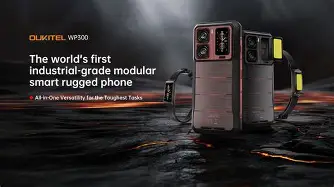
Rugged smartphones have evolved from niche industrial tools into sophisticated consumer electronics that challenge the supremacy of mainstream flagship devices. Among the most notable entries in the contemporary field is the Oukitel Wp300. While its physical durability and massive battery life are often the primary talking points in marketing materials, this device harbors a suite of advanced features and engineering choices that are frequently overlooked. For professionals in demanding industries or outdoor enthusiasts who require more than just a "tough case," understanding these nuances is essential for maximizing the device’s potential.
The Oukitel Wp300 represents a shift toward "civilized ruggedness," where high-end specifications meet military-grade protection. In an era where mainstream flagships are becoming increasingly fragile and difficult to repair, the Wp300 offers a counter-narrative of longevity and utility. However, to truly appreciate this device, one must look beyond the IP68 rating and the reinforced rubber bumpers. There are specific integrated technologies and software optimizations within the Wp300 that set it apart from its predecessors and competitors alike. This article explores the five hidden features of the Oukitel Wp300 that every prospective owner or current enthusiast must know about to leverage the full power of this modern workhorse.
Detailed Product Analysis: Engineering for Extremes
To understand the hidden features of the Oukitel Wp300, it is first necessary to analyze the foundation upon which they are built. The device is powered by a high-efficiency processor designed to balance high-speed data processing with disciplined power consumption. This is critical for a device that might be used for GPS navigation in a remote forest for three days straight without access to a power outlet. The display isn't just large; it is engineered with a high refresh rate and specific peak brightness levels that ensure readability under the harsh noon sun—a common failure point for standard consumer electronics.
The chassis itself is a marvel of composite engineering. It uses a combination of high-grade aluminum alloy for structural rigidity and advanced Thermoplastic Polyurethane (TPU) for impact absorption. Most users see a chunky phone, but engineers see a multi-layered dampening system designed to protect the delicate internal soldering from the kinetic energy of a six-foot drop onto concrete. This structural integrity is what allows the "hidden" hardware features to function reliably in environments that would instantly disable a standard glass-backed smartphone.
1. The Integrated Toolbag: Digital Sensors for the Physical World
One of the most significant yet under-advertised features of the Oukitel Wp300 is the sophisticated "Digital Toolbag" integrated into the system software. While many phones have a basic compass or a flashlight, the Wp300 utilizes its advanced sensor array—including a high-precision gyroscope, barometer, and geomagnetic sensor—to provide a professional-grade suite of instruments. For a surveyor working in remote hills or a foreman on a construction site, these tools are more than just gimmicks.
The toolbag includes a plumb bob, a gradienter, and a height measurement tool that uses the camera's focal length and the accelerometer to estimate the height of structures or trees. There is also a noise testing tool that utilizes the phone’s high-sensitivity microphones to measure decibel levels in work environments, ensuring safety compliance on the fly. Because these are baked into the firmware rather than being third-party downloads, they are optimized for low battery consumption and work entirely offline, which is critical for real-world field utility.
2. Advanced Gloved-Mode Sensitivity and Wet-Touch Tech
It is a common frustration for outdoor workers: the moment it starts raining or the moment they put on safety gloves, their smartphone becomes a brick. The Oukitel Wp300 addresses this with a hidden layer of capacitive tuning known as "Gloved-Mode." This isn't just a software toggle that increases sensitivity; it is a hardware-level adjustment that allows the screen to detect the electrical signature of a finger through several millimeters of fabric or leather.
Furthermore, the Wp300 features "Wet-Touch" technology. Most screens glitch when water droplets bridge the capacitive sensors, leading to "ghost touches." The Wp300’s display controller is programmed to distinguish between the static signal of a water drop and the dynamic signal of a moving finger. This allows hikers to navigate through a storm or maritime workers to send messages on a spray-hit deck without having to dry the screen every five seconds. This level of environmental adaptation is rarely found in spec sheets but defines the user experience in the field.
3. Underground and Deep-Forest Signal Optimization
Standard smartphones are often optimized for urban environments with high cell tower density. When a user enters a deep canyon, a dense forest, or an underground basement, the radio frequency (RF) performance often drops off significantly. The Oukitel Wp300 includes a hidden antenna "boost" architecture. By utilizing a larger internal surface area for antenna placement and specific shielding, the device can maintain a signal lock in areas where other phones report "Searching for Service."
Discover deals on Electronics — updated daily.
Browse Now →This is paired with a multi-frequency GNSS (Global Navigation Satellite System) receiver. While standard phones might only use GPS and GLONASS, the Wp300 frequently taps into Galileo and Beidou simultaneously. This quad-system positioning provides a "hidden" layer of safety for those venturing off the grid. It ensures that even if one satellite constellation is obstructed by a mountain range, the device has enough data points to provide an accurate location within a few meters. For rescuers or explorers, this redundancy is a life-saving feature hidden within the communications chipset.
4. Reverse Charging: The Survival Power Bank
While the massive battery capacity of the Oukitel Wp300 is well-known, its capability as a "Power Station" is a feature many users forget to utilize. Hidden in the settings under battery management is the "Reverse Charging" or OTG (On-The-Go) power delivery mode. This essentially transforms the smartphone into a high-capacity power bank for other devices.
Consider a scenario where a group is hiking and a primary GPS unit or a companion’s communication device dies. The Wp300 can output a steady current via its USB-C port to recharge those peripherals. This isn't just for emergencies; it's a convenience for charging wireless earbuds or smartwatches in the tent at night. The engineering challenge here was managing heat during bilateral power transfer, which Oukitel solved using internal graphite cooling pads that dissipate heat away from the battery cells, ensuring that providing power to others doesn't degrade the Wp300’s own long-term battery health.
5. Customizable Physical Shortcut Key
In the world of standard smartphones, users are at the mercy of whatever physical buttons the manufacturer provides. The Oukitel Wp300 features a "hidden" tactical advantage on the side of the chassis: a programmable physical key. While it might look like a simple button, it is a gateway to high-speed utility that bypasses the touchscreen entirely.
Users can map this button to three different actions: a single press, a double press, and a long press. For a worker in a dark environment, the single press can be mapped to a high-intensity flashlight. For an adventurer, the double press can trigger an SOS signal or an underwater camera mode (where the touchscreen is disabled to prevent water-pressure errors). A long press could instantly launch a Push-To-Talk (PTT) application, turning the phone into a global walkie-talkie. This physical interface is essential for situations where the user’s hands are dirty, wet, or occupied, providing a level of accessibility that software-only menus cannot match.
Comparison and Technical Overview
To better understand where the Oukitel Wp300 sits in the current electronics landscape, it is helpful to compare its core philosophies with those of a standard flagship and a generic entry-level rugged phone. The following table illustrates the technical disparities that drive these hidden features.
| Feature Category | Oukitel Wp300 | Standard Flagship | Entry-Level Rugged |
|---|---|---|---|
| Durability Rating | IP68, IP69K, MIL-STD-810H | IP68 (Water only) | IP68 |
| Input Versatility | Glove & Wet Touch Optimized | Standard Capacitive | Standard Capacitive |
| Energy Management | Massive Capacity + Reverse Charging | Day-use Capacity + Wireless Power | Moderate Capacity |
| Navigation | Quad-System GNSS + Barometer | Dual-System GPS | Basic GPS |
| Physical Interface | Customizable Tactical Key | Standard Power/Volume | Standard Power/Volume |
Pros and Cons: A Balanced Perspective
No device is perfect, and the Oukitel Wp300 is designed for a specific set of priorities. While its strengths are formidable, buyers should be aware of the trade-offs involved in carrying such a powerhouse.
- Pro: Exceptional Structural Integrity. The device can withstand high-pressure water jets and extreme temperature fluctuations that would crack the internal components of lesser phones.
- Pro: Incredible Battery Endurance. For users who frequently spend 48 to 72 hours away from civilization, the Wp300 provides peace of mind that standard phones simply cannot offer.
- Pro: Specialized Field Tools. The inclusion of real-world measurement sensors turns the phone into a multi-tool for engineers and outdoor professionals.
- Pro: Bright and Responsive Display. High nits and high refresh rates ensure the screen is usable in the exact outdoor conditions it was built for.
- Con: Significant Weight and Bulk. The physical protection and battery capacity result in a device that is considerably heavier than a standard smartphone, which may not fit comfortably in all pockets.
- Con: Charging Time. Even with fast-charging technology, a battery of this size takes longer to reach 100% compared to typical consumer phones with smaller cells.
- Con: Discrete Aesthetics. The industrial design is focused on function over fashion, which may not appeal to users who prefer the sleek, slim look of urban electronics.
Buying Guide: Is the Oukitel Wp300 Right for You?
Choosing a rugged phone like the Oukitel Wp300 requires a shift in mindset. Instead of looking for the thinnest device or the most mainstream brand name, you must focus on the environment where the phone will spend 90% of its life. Here are the key factors to consider before purchasing.
Looking for the best Electronics deals on Amazon?
See Deals →Environment and Occupation
If you work in construction, agriculture, emergency services, or heavy industry, the Wp300 is an investment in reliability. The cost of replacing a broken "normal" phone twice a year far exceeds the initial investment in a rugged device. Similarly, for hikers, climbers, and overlanders, the integrated sensors and GPS redundancy provide a layer of safety that is difficult to quantify until you actually need it.
Battery Needs
Evaluate your charging habits. If you are frequently in a vehicle or an office with easy access to a plug, you might not "need" the extra bulk of the Wp300’s battery. However, if your lifestyle involves long-haul travel, remote camping, or long shifts in the field where a dead phone is a liability, the Wp300’s capacity becomes its most valuable asset.
Software Expectations
Rugged phones often run a cleaner, more utilitarian version of Android. If you enjoy heavily skinned interfaces with dozens of built-in "lifestyle" apps, you might find the Wp300’s focused approach to be sparse. However, for those who value performance and want to avoid "bloatware," the Oukitel approach is refreshing and contributes to the device's stability under load.
Handling the Weight
It is highly recommended that potential buyers check the weight specifications. If you carry your phone in a lightweight suit pocket, the Wp300 will be noticeably heavy. If you carry your phone in a holster, a backpack, or heavy-duty work trousers, the weight will be negligible compared to the utility it provides.
Conclusion
The Oukitel Wp300 is much more than a hardened exterior. It is a thoughtfully engineered piece of electronics that caters to a specific, demanding lifestyle. From the hidden complexities of its wet-touch screen to the altruistic utility of its reverse charging capabilities, the device is designed to be a reliable partner in the most challenging conditions on Earth. While it may not win awards for its slimness, it wins where it counts: in the forest, on the worksite, and in the hands of the professional who cannot afford for their technology to fail.
By understanding and utilizing these five hidden features—the digital toolbag, the gloved-mode sensitivity, the signal optimization, the reverse charging, and the customizable shortcut key—owners can unlock a level of productivity that goes far beyond what is expected of a smartphone. The Oukitel Wp300 stands as a testament to the idea that a phone can be both a high-tech computer and a rugged piece of field gear, seamlessly blending the digital and physical worlds for those who live on the edge of the map.