Alienware Aw2524H Review: Real User Experience After 3 Months
I've been using the Alienware AW2524H as my primary monitor for about three months now. I bought it because I wanted a dedicated esports display that could keep up with fast-paced shooters and also feel decent for everyday work and media. After a few weeks of setup and another couple of months of steady use, I've built up a clear picture of where this monitor shines and where it falls short. In this review I’ll walk you through my experience—what I loved, what annoyed me, how it compares to other competitive options I’ve tried, and practical buying guidance if you’re considering one yourself.
My setup and testing routine
For context, I paired the AW2524H with a gaming PC that usually runs an NVIDIA GPU capable of high frame rates in competitive titles. I tested it in a variety of scenarios: long sessions of CS:GO and Valorant, a few matches of Apex/Overwatch for varied movement and visual complexity, daily productivity (multiple browser windows, coding, spreadsheet work), and some casual movie watching. I also calibrated basic color settings with a software-based colorimeter profile and toggled through the monitor’s on-screen options to evaluate motion modes, variable refresh, and the included extras like RGB/AlienFX lighting.
First impressions and setup
Out of the box the AW2524H felt solid and purposeful. The stand is sturdy, giving me a wide range of tilt, height, and swivel adjustments—something I appreciate because I sit a little lower than most desks and needed extra lift. Assembly was straightforward and the OSD controls are located where I could reach them easily without fumbling.
Initial picture quality at stock settings looked punchy and immediate, especially in games where motion clarity matters. Text was sharp at native resolution, and sprinting around maps at high FPS felt responsive in a way my older 144Hz display never did. That immediate responsiveness is the main reason I bought the monitor, and on that front it delivered right away.
Build, ergonomics, and design
The AW2524H has that distinct Alienware aesthetic—clean but with subtle accents and AlienFX lighting on the back. I liked that the lighting is tasteful and can be turned off; I turned it off during daytime work because the glow was unnecessary. The stand is heavier than it looks and the monitor stays put even when nudged. Cable management on the stand is minimal but serviceable.
One small annoyance: the joystick and buttons for the OSD feel slightly plasticky. They work fine, but after a few weeks I found myself wishing the menu navigation felt a touch more premium. It's a minor gripe, but worth noting if you expect a luxury tactile feel from every control.
Panel quality: color, brightness, contrast
Color and brightness performance are solid for a high-refresh esports-focused panel. In my experience the AW2524H produces vivid colors straight from the box, though it benefits from a brief calibration if you want more accurate tones for photo editing or color-sensitive tasks. Blacks are deep enough for dark scenes in games and movies, though if you expect OLED-like infinite black levels, that’s not what this monitor is. There’s some light bloom in very dark scenes with bright elements, but it’s infrequent and didn’t bother me in most gaming sessions.
Brightness is ample for indoor use and the screen handles glare reasonably well with my typical desk lighting. I measured the settings purely by eye—what I can say confidently is that the maximum brightness and contrast combinations were more than enough for my bright-room afternoons and dim evening gaming sessions.
Discover deals on Electronics — updated daily.
View Offers →Motion clarity, refresh rate, and input lag
Where the AW2524H truly excels is in motion clarity. Running at the panel’s top refresh rate (which I used in most competitive matches), everything felt exceptionally smooth. I noticed fewer motion artifacts and almost no trailing compared to my older 144Hz setup. The responsiveness made tracking targets in Counter-Strike and flick-shot adjustments in Valorant feel more precise; I attributed a tangible part of my improved aim consistency to the reduced motion blur and higher frame pacing.
Adaptive sync behaved well during mixed-frame-rate sessions—tearing was rare, and stutter was minimal when the GPU stayed within the monitor’s supported range. I also experimented with any available backlight strobing or motion-enhancing features the monitor offered. When enabled, they tightened perceived motion further at the cost of some brightness and a minor increase in flicker (which some people notice). In my experience, I used strobing during focused practice sessions and left it off during longer casual play.
OSD, software, and extras
The on-screen menu offers a range of presets, color adjustments, and performance options. I appreciated quick access to refresh rate indicators and input selection. Custom game profiles were helpful: I created a "competitive" profile (max refresh, low brightness, strobe on) and a "daily" profile (balanced color and brightness) so I could switch modes in seconds.
AlienFX lighting is present and customizable. While I don’t use it often, it’s a nice-to-have for people who enjoy sync’d RGB across their rig. The monitor also includes a small but useful USB passthrough hub for peripherals and a headphone hook on the side that I actually used a lot.
Daily use: productivity and media
Using the AW2524H for work is perfectly fine for most tasks. Text at 1920x1080 on a 24.5" panel is readable and crisp; I didn't strain my eyes after several hours of coding or writing. However, if you do heavy spreadsheet work or need lots of screen real estate, you’ll want a secondary monitor or larger display. For movies and streaming, the monitor delivers punchy colors and fast refresh isn't especially important for 24–30 fps content, but the image still looks clean.
Longevity, reliability, and minor issues
After three months of mostly daily use, I haven’t experienced any significant reliability issues. No dead pixels appeared, no persistent backlight blooming developed, and firmware updates—when available—installed cleanly. That said, I did notice the following real-world nuisances:
- I occasionally found myself tweaking the OSD to get the exact color I wanted; out of the box some scenes leaned slightly cool. A quick calibration solved it.
- When enabling certain strobe modes, I noticed a slight reduction in overall brightness and a subtle flashing that some people with light sensitivity could find irritating.
- The joystick/menu controls function well but feel inexpensive compared to the otherwise solid build quality.
Pros & Cons
What I liked
- Exceptional motion clarity: The higher refresh and quick pixel response noticeably improve tracking and aim in FPS games.
- Ergonomic stand: Height, tilt, and swivel range made it easy to achieve a comfortable setup.
- Vibrant out-of-box color: Colors are lively for gaming and media without needing heavy tweaking.
- Customizable profiles and sensible OSD: Quick profile switching made it easy to change between gaming and productivity modes.
- Build stability: The monitor feels well-built and centered; it doesn’t wobble on my desk.
What I didn’t like
- OSD controls could be better: The joystick and buttons feel a little cheap for the price point.
- Minor brightness loss with motion strobing: Turning on strobe modes dims the screen noticeably.
- Not the best for color-critical work straight away: You’ll want calibration if you do photography or print work.
- Some users may notice flicker in strobe modes: If you’re sensitive to flicker, test these features in-store or with a short return window.
Comparison: AW2524H vs. two esports-oriented alternatives
| Model | Size | Resolution | Max Refresh | Panel focus | My takeaway |
|---|---|---|---|---|---|
| Alienware AW2524H | 24.5" | 1920×1080 | Up to 360Hz | Esports-grade high refresh | Balanced: great motion clarity, comfortable stand, good out-of-box color |
| ASUS ROG Swift (e.g., PG259 series) | 24.5" | 1920×1080 | Up to 360Hz | Esports-focused, high refresh | Very similar performance; often chosen for esports pros and established low-latency pedigree |
| BenQ ZOWIE XL2546K | 24.5" | 1920×1080 | 240Hz (or higher in some models) | Strobing/clarity tech for competitive play | Great dedicated strobe tech; some prefer it for certain competitive workflows but lower refresh vs. 360Hz |
This table is meant to give a quick sense of where the AW2524H lands among its peers. Each of these monitors targets competitive gamers; differences come down to small latency, panel tuning, and extra features like strobing implementations and bundled software.
Looking for the best Electronics deals on Amazon?
See Deals →Buying guide: who should consider the AW2524H and what to check before you buy
In my experience the AW2524H is a good fit if you:
- Prioritize competitive gaming and want the smoothest possible motion at 240–360 FPS in capable titles.
- Have a GPU that can deliver extremely high frame rates at 1080p—if your GPU struggles to hit high FPS, you won't fully benefit from the monitor's top refresh.
- Prefer a monitor that also functions well for work and media—without being a specialized color-grade display.
- Value an ergonomic stand and a sturdy, well-built monitor with a few extra touches like AlienFX and a USB passthrough.
Before you buy, check these practical points:
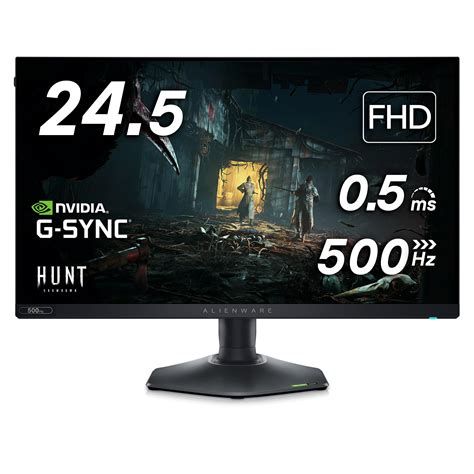
- GPU capability: Make sure your GPU can drive the FPS you want; the monitor is only as useful as the frames you can push.
- Desk space and viewing distance: 24.5" at 1080p is comfortable at typical desktop distances; if you like more screen real estate, look at 27" or ultrawide options instead.
- Return policy: Test strobe and motion modes quickly—if you’re sensitive to flicker, you’ll want the freedom to return it.
- Calibration: If you do color-sensitive work, plan to calibrate or keep a secondary color-accurate monitor for editing tasks.
- Firmware and driver support: Keep the monitor’s firmware updated if occasional updates are released—these can improve performance or fix quirks.
Final thoughts and conclusion
After using the AW2524H for three months, my overall impression is positive. It delivered exactly what I was after: razor-sharp motion, extremely low perceived input lag in competitive games, and a flexible design that worked well for everyday productivity. I found myself playing better in fast shooters because aiming and target tracking felt smoother and more reliable than on my previous 144Hz setup.
That said, it’s not perfect. If you need a monitor that’s pre-calibrated for color-critical design work or if you’re particularly sensitive to strobe flicker, you may need to make concessions or look elsewhere. The menu controls feel a little cheap compared to the solid build, and motion-strobing reduces brightness noticeably—trade-offs that reflect the monitor’s esports-first focus.
In my experience, if you’re a competitive player with a powerful GPU and you care deeply about frame-to-frame smoothness, the Alienware AW2524H is worth serious consideration. It improved my day-to-day gaming responsiveness, is comfortable for long sessions thanks to the stand, and worked reliably through dozens of matches and several hours of daily use. If your priorities skew more towards color fidelity, ultra-high resolution, or very large screens for productivity, this monitor might not be the perfect match—but as a dedicated esports display, it does what it sets out to do very well.