Biggest Msi Mpg 321Urxw Qd Oled Monitor Buying Mistakes (And How to Avoid Them)
Introduction
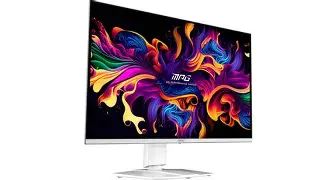
The MSI MPG 321URXW QD OLED monitor has attracted attention from buyers who want the deep contrast and rich color of OLED combined with quantum-dot saturation. For people shopping in the 31–32 inch desktop monitor space — whether for gaming, content creation, or mixed productivity — a QD‑OLED model promises significant visual advantages. Yet many buyers make avoidable mistakes when choosing a high‑end display of this class. This article walks through the most common missteps people make around the MSI MPG 321URXW QD OLED and offers practical advice on how to avoid them, including a detailed product analysis, pros and cons, a side‑by‑side comparison with other 32‑inch options, and a buying guide tailored to real‑world use cases.
Detailed product review and analysis
The MSI MPG 321URXW QD OLED positions itself as a premium desktop monitor that blends OLED’s infinite contrast with quantum‑dot color enhancement. In practice, that combination delivers strikingly deep blacks and lively, saturated colors that appeal to both gamers and creative professionals. Several practical attributes are important to evaluate when considering this model.
Visual performance
For scenes that rely on contrast — cinematic dark rooms, shadow detail in games, or graded footage — QD‑OLED panels typically outclass conventional IPS panels. Dark tones look fuller, and color vibrancy is stronger without appearing artificially boosted. For content creators who need wide gamut coverage, the quantum‑dot layer helps reach broader color spaces, making it easier to match print or broadcast targets after calibration.
However, buyers should remember that real‑world HDR performance is not just about inky blacks and color gamut. Peak specular highlights depend on peak brightness and local dimming strategies; OLED’s per‑pixel light control creates excellent local contrast, but peak luminance can be lower than the best mini‑LED alternatives. That affects how punchy HDR highlights appear in scenes with extremely bright speculars.
Gaming and motion
Low response times and virtually no motion blur are strong points for OLED technology, and this MSI model is no exception. Competitive gamers will appreciate responsive pixel transitions and consistent color during fast camera motion. Support for adaptive sync technologies (FreeSync/G‑Synch compatible implementations) reduces tearing and stuttering when paired with modern GPUs.
Refresh‑rate expectations should be matched to the buyer’s hardware. Many monitors in this size/segment offer high refresh options, but to take full advantage of high frame rates at high resolutions, a powerful GPU is required. Buyers who primarily play at 60–120Hz on older or midrange cards should factor that into the value proposition.
Productivity and desktop use
At desktop distances, a 31–32 inch 4K‑class monitor provides comfortable pixel density for text clarity and workspace real estate. Users who juggle multiple windows or detailed timelines will find the surface area beneficial. For professionals who work across photography, color grading, and soft proofing, hardware calibration and accurate factory profiles matter more than headline panel tech.
Ergonomics and build
Ergonomics — tilt, height, swivel, and VESA compatibility — are practical details that determine how the monitor fits into a workstation. The stand design and port placement influence cable management and desk space. MSI tends to include robust stand adjustments in its MPG line, but buyers should verify the exact configuration and whether a VESA arm is required for their setup.
Discover deals on Laptops & Computers — updated daily.
Shop Amazon →Connectivity and extra features
Modern monitors aimed at gamers and creators commonly provide a mix of DisplayPort, HDMI, and USB ports. Some models include a USB‑C or a built‑in KVM for laptop switching, while others add RGB lighting or on‑screen software for color profiles and picture‑in‑picture. Confirming the monitor’s exact inputs and supported bandwidth (for example, whether a given HDMI port supports full resolution at high refresh rates) prevents compatibility surprises.
Longevity and burn‑in considerations
OLED panels carry an inherent risk of image retention and burn‑in when static elements are displayed for extended periods. Manufacturers mitigate this with pixel shifting, screen savers, and software routines, and many provide warranty language addressing image retention. Buyers who plan to use static interface elements — such as toolbars, channel strips, or long spreadsheet columns — should research MSI’s burn‑in policy and follow best practices for panel longevity.
Pros & Cons
- Pros
- Exceptional contrast and true deep blacks from OLED technology
- Very wide and vivid color gamut thanks to quantum‑dot enhancement
- Fast pixel response for minimal motion blur in games
- Large screen area suited to multitasking and creative timelines
- Generally strong design and adjustable ergonomics in the MPG lineup
- Cons
- Higher price than comparable IPS models
- Potential for burn‑in with heavy static UI use over time
- Peak HDR highlights may not match the brightest mini‑LED monitors
- Actual input bandwidth and port layout must be confirmed to match high refresh at 4K
- Color calibration may be necessary to meet professional print or broadcast standards
Comparison: MSI MPG 321URXW QD OLED vs Typical Alternatives
| Feature | MSI MPG 321URXW QD‑OLED | 32" 4K IPS (typical) | 32" Mini‑LED (high HDR) |
|---|---|---|---|
| Panel Type | QD‑OLED (deep blacks, saturated color) | IPS (wide viewing angles, good color) | IPS/VA + Mini‑LED backlight (local dimming) |
| Contrast | Very high (per‑pixel control) | Moderate | High (depends on zone count) |
| Color Gamut | Very wide (quantum dots help) | Wide (usually sRGB/AdobeRGB coverage) | Very wide (good HDR color) |
| HDR Highlights | Excellent local contrast; peak brightness moderate | Limited by backlight | Very bright specular highlights (best for HDR) |
| Motion | Excellent (low response) | Good | Good to very good |
| Burn‑in Risk | Higher (OLED nature) | None | None |
| Best For | Gaming + cinematic content + color work (with care) | Office, mixed use, color work with less burn‑in risk | HDR video and photo work with bright highlights |
Buying guide: How to avoid the biggest mistakes
Choosing a premium monitor like the MSI MPG 321URXW QD‑OLED requires aligning expectations with real‑world needs. The following checklist helps buyers avoid the most common mistakes.
1. Mistake: Buying solely for marketing buzzwords
Many shoppers fixate on terms like "QD‑OLED," "4K," or high refresh numbers without thinking how those features map to everyday use. The safe approach is to match the monitor’s strengths to primary tasks. If the user is a professional colorist, investigate factory calibration, measured color accuracy, and calibration support. If gaming is primary, confirm supported refresh rates at the desired resolution and whether the GPU can consistently deliver frames to take advantage of it.
2. Mistake: Ignoring connectivity limits
A monitor that advertises high refresh at 4K requires sufficient input bandwidth. Buyers should check whether the DisplayPort and HDMI ports and the included cables support the target resolution and refresh (for example, 4K at high refresh often needs DisplayPort or HDMI 2.1 with the right settings). If the monitor includes USB‑C, verify power delivery and alternate‑mode support for laptop use.
3. Mistake: Overlooking burn‑in and warranty details
Not all OLED warranties treat image retention the same. Some vendors offer limited burn‑in coverage while others do not. Buyers who display static UI elements for long periods should confirm the manufacturer’s guidance and consider extended warranties. Also, learn about built‑in mitigation tools (pixel shift, automatic dimming, screen savers) and whether the monitor supports scheduling those features.
4. Mistake: Expecting desktop HDR to mirror TV HDR
HDR on monitors is a different experience than HDR on large TVs. HDR "experience" is a product of peak brightness, panel contrast, local dimming, and content mastering. QD‑OLED excels at contrast and color, but its peak specular brightness may be lower than mini‑LED options. For HDR grading or previewing movies intended for high‑brightness displays, verify that the monitor meets the required brightness and color targets.
Looking for the best Laptops & Computers deals on Amazon?
Browse Now →5. Mistake: Skipping hands‑on checks for uniformity and backlight behavior
Panel uniformity, glow, and minor pixel defects are practical concerns not fully captured by spec sheets. If possible, view a display in person or buy from a retailer with a generous return policy. Look for reviews that include uniformity measurements and reports of panel variance.
6. Mistake: Neglecting calibration and color workflows
Out of the box, even high‑end monitors can benefit from calibration. Professionals should budget for a colorimeter and learn a simple calibration workflow. For most users, a factory‑calibrated profile may be sufficient, but checking the monitor’s reported Delta E values and whether it supports hardware calibration (via a built‑in LUT or companion software) will help determine the necessary setup steps.
7. Mistake: Underestimating total cost of ownership
High‑end displays can require additional purchases — calibration tools, a better GPU for high‑frame 4K gaming, or a VESA arm for optimal ergonomics. Factor these into the budget, and consider the monitor’s expected useful life and warranty support when comparing value.
Real‑world use cases and recommendations
Different buyer profiles will approach the MSI MPG 321URXW QD OLED with different priorities:
- Competitive gamer: Prioritize refresh rate and low latency. Confirm the monitor supports the desired resolution at the target refresh and that the gamer’s PC can deliver high frame rates. Use in a clean, variable‑contrast environment for the most responsive experience.
- Content creator/photographer: Prioritize color accuracy, calibration support, and consistent color reproduction across devices. Use a hardware colorimeter, maintain a neutral ambient light environment for editing, and check the monitor’s gamut coverage for print or broadcast targets.
- General productivity user: Prioritize comfort and ergonomics. A 31–32 inch panel provides generous workspace; ensure the stand and stand height fit the desk, or plan for a VESA arm. Practice screen‑saving and pixel‑shifting routines to reduce wear if many static windows are used.
- Mixed use (home office + media): The QD‑OLED’s vivid color and deep blacks make it an excellent all‑rounder, but users should be mindful of static toolbars and consider rotating content, using lock‑screen timers, and reducing static overlays when possible.
Checklist before buying
- Verify the exact input ports and whether they support the desired resolution + refresh (check DisplayPort vs HDMI capabilities).
- Read the manufacturer’s warranty and burn‑in policy carefully.
- Look for independent reviews that test uniformity, color accuracy, HDR peak brightness, and image retention behavior.
- Decide whether to budget for a calibrator and additional accessories (VESA arm, cable upgrades).
- Check return and exchange policies so buyer protection is in place if the panel has defects.
Conclusion
The MSI MPG 321URXW QD OLED represents a compelling step for buyers who want OLED contrast with quantum‑dot color. When selected with intention — by matching real needs to the monitor’s strengths, confirming connectivity and warranty details, and planning for calibration and burn‑in mitigation — it can be an excellent centerpiece for gaming and creative work. The biggest mistakes come from treating the model as a simple spec upgrade rather than a different technology with specific trade‑offs. Buyers who research, compare with IPS and mini‑LED alternatives, and follow ergonomic and panel‑care best practices will be positioned to get the most value and longevity from this class of monitor.