Don't Buy the Cinebeam Q Until You Read This Full Analysis
Introduction
The Cinebeam Q has attracted attention as a premium projector option for home entertainment. It promises cinematic picture quality, a compact footprint, and modern smart features. For buyers deciding whether to replace a TV, upgrade a home theater, or buy a portable projector for mixed use, the Cinebeam Q presents an enticing package — but not every feature and trade-off suits every household. This article breaks down the Cinebeam Q in practical, real-world terms, evaluates how it performs in common use cases, compares it to other projector types, and gives a structured buying guide so readers can decide with confidence.
What the Cinebeam Q Is (and What It Isn’t)
The Cinebeam Q positions itself in the market as a premium compact projector that targets cinephiles and media-forward living rooms rather than budget portable units or ultra-large-venue laser cinema projectors. It typically combines high-resolution imaging, a long-life light source (often laser-based in this class), and integrated smart platform features — aiming to deliver a TV-like experience on a projection screen or wall.
It is not designed to be a low-cost throw-and-play pico projector for quick presentations, nor is it usually built for professional installation in commercial cinemas. Understanding that positioning helps set realistic expectations around brightness, color performance, and setup complexity.
Design and Build
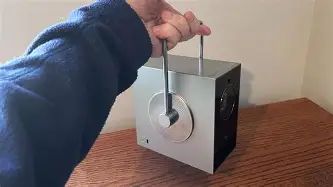
The Cinebeam Q usually sports a compact, minimalist chassis that balances portability with an appearance suitable for a living room. The build quality in this category generally leans toward solid plastics with premium finishes and well-integrated ventilation. Physical controls and on-device inputs are typically minimal because most users interact via remote control or the smart app.
For many buyers, the practical design considerations are:
- Size and weight for moving between rooms or taking outside
- Mounting options — ceiling mount compatibility or tabletop placement
- Port location and accessibility for HDMI, USB, and audio connections
- Ventilation and fan noise — will it sit quietly in a living room or home theater?
Optics, Brightness, and Contrast
Optical performance is the heart of any projector purchase decision. The Cinebeam Q's optical system is engineered to provide sharp 4K (or near-4K) images across typical home-theater screen sizes. Buyers should expect clean geometry with electronic or lens-shift assisted keystone correction for easier setup, although manual, physical lens shift is often superior for preserving image uniformity.
Brightness and contrast determine whether a projector is best used in a dark dedicated theater or a multi-use living room with some ambient light. In real-world use:
- If the projector is paired with a light-control environment (blackout curtains or dedicated room), the Cinebeam Q can deliver deep, immersive images.
- In brighter living rooms, performance depends on screen choice and placement; brighter screens and controlled ambient light are required to get the most out of the unit.
Buyers often care more about perceived contrast and color saturation than raw lumen ratings. For many households, a projector that reproduces vivid colors and preserves shadow detail without crushed blacks will feel more cinematic even if its nominal brightness is moderate.
Color Performance and HDR
The Cinebeam Q typically emphasizes color accuracy and a wide color gamut to satisfy movie fans and streaming HDR content. When assessing HDR performance, practical points matter more than marketing labels:
- Does the projector tone-map HDR content gracefully, preserving highlight detail without making midtones look washed out?
- Are colors natural across skin tones and foliage, or are they oversaturated in a way that looks artificial on typical content?
- How does the projector handle specular highlights — are they clipped into bright blobs, or is there subtlety?
In most living-room scenarios, projectors cannot match the peak brightness of modern LED and OLED TVs, so HDR is often delivered as a controlled expansion of dynamic range rather than TV-like HDR with very bright highlights. That said, strong color processing and good tone-mapping can make HDR-enabled movies look markedly better than SDR even at projector brightness levels.
Audio, Smart Features, and Connectivity
Integrated speakers on projectors in this class provide convenience but usually cannot replace a properly sized soundbar or home-theater speaker system. The Cinebeam Q's internal audio will work for casual viewing in small rooms, while buyers who prioritize cinematic sound should plan for external audio options (optical, HDMI ARC/eARC, or Bluetooth). Real-world users often pair the projector with a compact soundbar to keep clutter minimal while improving dialogue clarity and bass response.
Find top-rated Electronics products at great prices.
View Offers →Smart features (streaming apps, voice control, app mirroring) are a major reason consumers favor modern projectors. The Cinebeam Q generally includes a smart OS with native apps for major streaming services, casting support, and a responsive remote. When evaluating smart functionality, consider:
- Whether the OS receives regular updates and supports the streaming services used most
- How snappy the UI is — slow app switching is a frequent annoyance
- Whether the remote supports voice search and backlit buttons for nighttime use
Real-World Use Cases
How well the Cinebeam Q fits a buyer depends heavily on intended use. Below are common scenarios and how the projector performs in them.
Home Theater and Movie Nights
For dedicated movie rooms, the Cinebeam Q works well when paired with light-control and a good projection screen. The large image size (100"+) and cinematic presentation are the main draws. Attention to screen gain and viewing geometry during setup pays dividends: a neutral-gain screen yields consistent color, while an ALR (ambient light rejecting) screen helps in multipurpose rooms.
Living Room / Family Room
When used in living rooms, the Cinebeam Q is best in the evenings with ambient lights dimmed. Families that want a TV replacement for occasional movies and sports must accept trade-offs: daytime brightness and HDR highlights won't match a bright TV. However, the large image and immersive scale make it an excellent choice for movie-enthused households and sports fans who can control light during viewing.
Gaming
Gamers will look at input lag, resolution, and motion handling. Projectors can provide an enormous image for couch multiplayer and cinematic single-player experiences, but competitive gamers who need sub-20 ms latency may prefer a gaming monitor or TV. The Cinebeam Q is attractive to console and casual PC gamers who prioritize immersion over peak responsiveness. Check the projector’s dedicated game mode and whether it supports high-frame-rate input.
Portable / Outdoor Use
During outdoor movie nights, the Cinebeam Q performs admirably with a portable screen and batteries or generator power when necessary. Portability, nozzle-like ventilation, and quick setup are important: small physical size and intuitive keystone/focus controls make the projector easier to use outside. Users should remember ambient light kills contrast outdoors — choose dusk-to-nighttime windows for best results.
Setup, Calibration, and Day-to-Day Operation
Setting up any projector includes placement, focus, geometric correction, and color calibration. The Cinebeam Q generally offers user-friendly setup with autofocusing or simple manual focus, digital keystone correction, and picture presets. For enthusiasts wanting top performance, a basic calibration using a colorimeter or having a professional calibrator adjust color temperature and gamma will improve accuracy.
Day-to-day operation considerations:
- Fan noise levels during long viewing sessions — quieter fans are essential for dialogue clarity
- Software updates that may improve app availability or fix bugs
- Laser/LED source longevity — long-life light engines reduce maintenance compared to lamps
Maintenance and Reliability
A notable advantage of laser or advanced LED light engines is low maintenance. Buyers should check warranty length, whether the projector has replaceable filters, and local service options. Real-world owners value a reassuring warranty and a service network for repairs, given projectors are an investment.
Pros & Cons
- Pros
- Immersive large-screen experience that transforms movie watching and group gaming
- Compact, living-room-friendly design with a premium aesthetic
- Smart platform with built-in streaming apps and casting support
- Long-life light source reduces lamp changes and lowers maintenance
- Good color reproduction and HDR tone-mapping for cinematic content
- Cons
- Cannot match the peak brightness of modern TVs in brightly lit rooms
- Integrated speakers useful but insufficient for serious home-theater audio
- Input lag may be higher than gaming-focused displays, affecting competitive play
- Setup sensitivity — throw distance and screen selection materially affect image quality
- Higher initial cost than basic portable projectors or small TVs
How the Cinebeam Q Compares
| Feature | Cinebeam Q | Typical 4K Laser Home Projector | Portable LED Mini Projector |
|---|---|---|---|
| Image Quality | High — 4K-class optics, good color processing | Very High — often better lenses and brightness for dedicated rooms | Moderate — best for casual viewing and small screens |
| Brightness in Ambient Light | Moderate — suitable for controlled living rooms | High — designed for larger rooms with higher lumen output | Low — best in dark environments |
| Portability | Good — compact but not pocket-sized | Poor — heavier and often installed | Excellent — ultra-portable and battery options available |
| Smart Features | Integrated apps and streaming support | Varies — some have smart platforms, others rely on external sources | Limited — basic casting or USB media playback |
| Audio | Built-in speakers adequate for small rooms | Often minimal — external audio recommended | Small speakers — rarely sufficient for group viewing |
| Price Range | Premium for compact projectors | Premium to very expensive | Budget-friendly |
Buying Guide — What to Check Before Buying
Projectors are a different purchase model than TVs. The Cinebeam Q will reward buyers who consider environment, intended use, and accessory needs. The checklist below captures the practical questions buyers should answer before purchasing.
1. Where will it be used?
Measure the room and decide whether the space can be darkened. For living rooms, evening viewing is practical. For daytime viewing, consider a dedicated screen with ambient light rejection or opt for a bright LED/LCD TV instead.
Discover deals on Electronics — updated daily.
View Offers →2. What screen size and throw distance are required?
Map out the projector's throw ratio and required distance to get the desired image size. If the Cinebeam Q will be ceiling-mounted, ensure the mount location and cable runs are planned in advance.
3. Do you need a screen?
Plain walls work but often produce inferior color accuracy and reduced contrast. An appropriate projection screen — neutral gain for dark rooms, ALR for multipurpose rooms — markedly improves results.
4. Sound system plans
If cinematic audio matters, budget for an external soundbar or AV receiver and speakers. Confirm the projector’s audio outputs match the intended sound system (HDMI ARC/eARC for soundbars, optical for older systems, or Bluetooth for simple wireless options).
5. Gaming considerations
Check for a dedicated low-latency mode and whether the projector supports high-frame-rate inputs. For casual or console gaming, the Cinebeam Q is often fine; for esports or competitive play, a dedicated monitor remains preferable.
6. Maintenance and warranty
Confirm light-source lifetime (laser/LED hours), warranty length, and local service options. Laser and LED sources reduce recurring lamp costs but still require responsible use and occasional servicing for dust and ventilation.
7. Inputs and interoperability
Verify the projector has sufficient HDMI ports, at least one with support for HDCP 2.2/2.3 for streaming devices, and any legacy inputs needed for older sources. If using multiple devices, a small AV receiver or HDMI switcher can simplify connections.
8. Test in-person where possible
Seeing a projector in a showroom or demo room helps assess perceived picture quality, fan noise, and UI responsiveness. If a physical demo isn’t possible, look for extended return policies so buyers can test in their own space.
When to Buy — and When to Wait
The Cinebeam Q is a compelling option if the buyer values large-screen immersion, a compact form factor, and smart features while planning to watch primarily in dimmer conditions. It is less compelling if the buyer needs bright, all-day viewing in a sunny living room, or if very low input lag is essential for competitive gaming.
Buyers should wait or look elsewhere if they:
- Need a plug-and-play daytime TV replacement for brightly lit rooms
- Require the absolute lowest input lag for high-level competitive gaming
- Prefer to avoid the additional cost and planning associated with screens and audio upgrades
Conclusion
The Cinebeam Q offers a strong, modern approach to home projection: an attractive mix of image quality, convenience, and longevity in a compact package. For movie lovers, families who enjoy shared viewing experiences, and casual gamers, it provides a level of immersion that a TV can’t match at the same physical size. However, buyers must align expectations with room conditions and secondary spending on screens and sound to truly unlock its potential. By assessing where it will be used, planning for a suitable screen and audio setup, and verifying connectivity and latency needs, prospective owners can make an informed decision and avoid disappointment after purchase.