I Switched to the Sigma 17 40Mm F 1 8 Dc Art and Here is What Happened
For years, the landscape of crop-sensor (APS-C) photography was defined by a specific set of compromises. Photographers who opted for lighter, more affordable APS-C bodies often found themselves yearning for the shallow depth of field and superior low-light performance traditionally reserved for full-frame systems. When Sigma introduced the 18-35mm f/1.8 DC HSM Art, it shattered many of those preconceptions. However, as the ecosystem evolved, a specific demand arose for a slightly wider and slightly longer range that maintained that unprecedented constant aperture. This led many enthusiasts and professionals to look toward the specialized Sigma 17-40mm f/1.8 DC Art as a potential "holy grail" lens for their kits.
Switching to a lens of this caliber represents more than just a change in focal length; it represents a fundamental shift in how a photographer approaches their craft. The Sigma 17-40mm f/1.8 DC Art is designed specifically for digital cameras with APS-C size sensors, offering a versatile zoom range that covers many of the most popular focal lengths—from wide-angle landscapes to standard environmental portraits. This article explores the technical nuances, real-world performance, and the transformative effect this specific piece of glass has on the APS-C shooting experience.
The Engineering Marvel of the Art Series
Sigma’s Art line has earned a reputation for prioritizing optical excellence above all else, often resulting in lenses that are larger and heavier than their competitors but undeniably superior in image quality. The 17-40mm f/1.8 DC Art is no exception. Its construction involves a complex arrangement of high-quality glass, including Special Low Dispersion (SLD) and "F" Low Dispersion (FLD) glass elements. These elements are meticulously placed to minimize chromatic aberrations and distortions that often plague wide-angle zoom lenses.
One of the first things a photographer notices when switching to this lens is the physical presence. It is a substantial piece of equipment, built with Thermally Stable Composite (TSC) materials and a brass bayonet mount. The internal focusing and zooming mechanisms mean the lens does not change physical length during operation, which is a significant advantage for those using filters or gimbal stabilization systems. The tactile feedback of the zoom and focus rings is dampened to a professional standard, allowing for precise adjustments that feel deliberate and smooth.
Optical Performance and Wide-Open Capability
The primary draw of this lens is the constant f/1.8 aperture. In the world of zoom lenses, especially those designed for APS-C sensors, an f/1.8 aperture is almost unheard of. Most professional-grade zooms stop at f/2.8. That extra stop of light is a game-changer for two reasons: low-light capability and bokeh quality. When shooting at 17mm, the lens provides a wide perspective that is perfect for architectural interiors or evening street photography. At 40mm, it enters the territory of a classic "nifty fifty" equivalent (roughly 60mm on a full-frame sensor), making it a formidable tool for portraiture.
Switching to this lens often eliminates the need to carry multiple prime lenses. In a single afternoon, a photographer can transition from capturing a sweeping mountain vista at 17mm to a tight, intimate portrait at 40mm, all while maintaining the ability to blur the background into a creamy, non-distracting wash of color. The nine-blade rounded diaphragm ensures that out-of-focus highlights remain circular and pleasing even when stopped down slightly.
Real-World Use Cases
To truly understand what happens when switching to the Sigma 17-40mm f/1.8 DC Art, one must look at how it performs in the field. From wedding ceremonies to documentary filmmaking, the versatility of this focal range combined with the speed of the aperture opens doors that were previously closed to APS-C users.
Shop the latest Cameras & Photography picks on Amazon.
Shop Amazon →Event and Wedding Photography
In the high-pressure environment of a wedding, lighting is rarely ideal. Churches, reception halls, and evening garden parties often force photographers to push their ISO to noisy levels. Switching to this Sigma lens allows for a lower ISO, preserving detail and dynamic range. The 17mm end is wide enough to capture the entire bridal party at the altar, while the 40mm end allows the photographer to step back and capture candid moments without encroaching on the guests' personal space. The sharpness is consistent across the frame, ensuring that the bride's dress and the architectural details of the venue are rendered with crystalline clarity.
Travel and Street Photography
For the travel photographer, weight is always a concern, but so is quality. While this lens is heavier than a standard kit zoom, it replaces the need for a 20mm, 24mm, and 35mm prime. When walking through the dense streets of a historic city, the ability to zoom quickly from an environmental shot of a market stall to a detail shot of a craftsman's hands is invaluable. The autofocus, powered by Sigma’s Hyper Sonic Motor (HSM), is fast and nearly silent, which is crucial for capturing candid street scenes without drawing unwanted attention.
Video Production and Cinematography
The video community has been among the most enthusiastic adopters of the Sigma Art zoom series. The constant f/1.8 aperture is particularly beneficial for videographers who need to maintain a consistent exposure while zooming or who want to achieve a "cinematic" shallow depth of field on a Super35 sensor. The minimal focus breathing—the slight change in focal length when adjusting focus—makes it a reliable choice for pull-focus shots. Whether it is being used for vlogging, documentary work, or independent film, the lens delivers a look that many struggle to distinguish from much more expensive cinema primes.
Pros and Cons of the Sigma 17-40mm f/1.8 DC Art
- Unmatched Aperture: The f/1.8 constant aperture is the standout feature, providing incredible low-light performance and depth-of-field control that rivals many prime lenses.
- Superior Build Quality: The lens feels indestructible, with a professional finish and smooth mechanical operation that inspires confidence in various weather conditions.
- Internal Zoom and Focus: The fixed length of the lens during operation is a major plus for those using polarizing filters or specialized video rigs like gimbals and matte boxes.
- Outstanding Sharpness: Even when shot wide open at f/1.8, the center sharpness is remarkable, and it only improves as you stop down toward f/4 or f/5.6.
- Modern Aesthetic: Like all Art series lenses, the color rendering and contrast are punchy and modern, requiring less post-processing effort to achieve a professional look.
- Weight and Bulk: This is not a "pancake" lens. It is heavy and can make smaller APS-C mirrorless bodies feel front-heavy if not used with a grip.
- Lack of Image Stabilization: There is no built-in Optical Stabilizer (OS). While the fast aperture helps compensate by allowing faster shutter speeds, video shooters without in-body stabilization may find handheld shots challenging.
- APS-C Only: While it can be mounted on full-frame cameras in crop mode, it is strictly designed for smaller sensors, which may be a limitation for those planning to upgrade their camera body soon.
Buying Guide: Is This Lens Right for You?
Deciding to switch to the Sigma 17-40mm f/1.8 DC Art requires an honest assessment of your current gear and your long-term goals. Because this lens represents a significant investment, buyers typically care about longevity, compatibility, and the specific "look" the lens provides.
First, consider your camera body. While this lens was originally a staple for DSLR users (Nikon F and Canon EF mounts), it has found a second life on mirrorless systems via high-quality adapters. If you are using a Sony E-mount or Fuji X-mount camera, ensure you have an adapter that supports electronic communication to maintain autofocus and aperture control. Second, evaluate your shooting style. If you primarily shoot landscapes at f/8 on a tripod, the f/1.8 aperture might be overkill, and you could save weight with a slower zoom. However, if you are an environmental portraitist or an event photographer, this lens is arguably the single best investment you can make for an APS-C system.
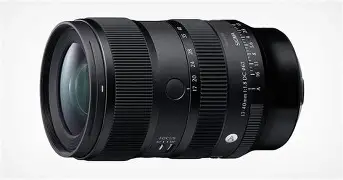
Finally, think about the focal range. 17-40mm is a versatile "walking around" range, but it doesn't offer much telephoto reach. If you often find yourself needing more than 40mm, you may need to pair this with a 50-100mm f/1.8 Art to truly complete your kit. The buyers who get the most out of this lens are those who value "prime-level" quality but require the flexibility of a zoom for fast-paced environments.
Find top-rated Cameras & Photography products at great prices.
See Deals →Technical Comparison: How It Stacks Up
To understand where the Sigma 17-40mm f/1.8 DC Art sits in the market, it is helpful to compare it to other common professional APS-C and full-frame lenses. While it occupies a unique niche, its performance metrics are best viewed alongside traditional 24-70mm equivalents.
| Feature | Sigma 17-40mm f/1.8 Art | Standard 17-55mm f/2.8 | Typical 18-135mm Kit Zoom |
|---|---|---|---|
| Maximum Aperture | f/1.8 (Constant) | f/2.8 (Constant) | f/3.5 - f/5.6 (Variable) |
| Low Light Performance | Excellent | Good | Poor |
| Build Material | TSC / Brass Mount | High-grade Plastic/Metal | Standard Polycarbonate |
| Optical Quality | Professional / Art Grade | Mid-Range Professional | Consumer Grade |
| Ideal Usage | Creative / Portrait / Video | General Purpose / Events | Travel / Casual |
| Physical Behavior | Internal Zoom/Focus | Extending Barrel | Extending Barrel |
Optical Nuances: Handling Flare and Ghosting
A detailed review would be incomplete without mentioning how the lens handles difficult lighting conditions. Wide-angle zooms are notoriously susceptible to flare when the sun is in or just outside the frame. Sigma has applied a Super Multi-Layer Coating to the glass elements of the 17-40mm f/1.8 to combat this. In practice, this means that while you can still induce flare for creative effect, the lens does a remarkable job of maintaining contrast and reducing "ghost" images when shooting directly into light sources.
The sharpness profile is also worth noting. Most lenses are softest at their extreme ends and sharpest in the middle. Amazingly, the 17-40mm maintains high resolving power even at 17mm and 40mm. For high-resolution APS-C sensors, such as those in the 32-megapixel range, this lens is one of the few zooms capable of actually taking advantage of all those pixels. You won't see the "muddy" details that are often found in cheaper zooms; instead, you get textures and fine lines that make images pop with a three-dimensional quality often called "micro-contrast."
Conclusion
Switching to the Sigma 17-40mm f/1.8 DC Art is often the moment a photographer stops feeling like their equipment is holding them back. It bridges the gap between the APS-C and full-frame worlds so effectively that many users find they no longer feel the "full-frame envy" that is so prevalent in camera forums. The lens provides a unique combination of speed, versatility, and build quality that is rare in the industry.
While the weight and the lack of stabilization are valid considerations, the sheer beauty of the images produced by this lens usually outweighs the physical inconvenience. It is a lens that encourages creativity, pushing the photographer to experiment with low-light environments and shallow depth-of-field compositions that were previously impossible with a zoom. Whether you are a seasoned professional looking for a workhorse lens or an enthusiast wanting to take your photography to the next level, the Sigma 17-40mm f/1.8 DC Art stands as a testament to what is possible when optical engineering is pushed to its limits. The transition to this lens is not just a gear upgrade; it is an invitation to see the world through a faster, sharper, and more expressive lens.