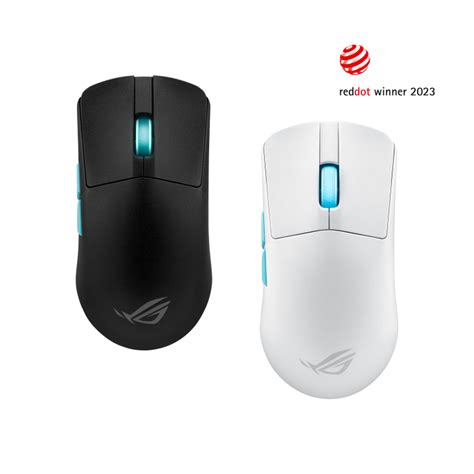
Rog Harpe Ace Aim Lab Edition Honest Review — Is the Hype Justified?
I've been using the Rog Harpe Ace Aim Lab Edition for roughly five months now. I bought it because the marketing promised an Aim Lab-focused tuning and a competitive, lightweight wireless experience. Since I've spent dozens of hours in Aim Lab, Valorant, and a fair amount of general desk work, I feel like I can give a grounded, owner-first perspective on whether the hype is real or just smoke and mirrors.
Why I bought the Harpe Ace Aim Lab Edition
In my experience, the selling points that pushed me to buy were: the Aim Lab-specific tuning out of the box, a very light shell for flick aim training, and the promise of top-tier wireless responsiveness. I was also curious about how a mainstream brand like ROG would tailor a product for Aim Lab users — would it be genuine optimization or just a marketing skin?
First impressions and build quality
Out of the box the Harpe Ace Aim Lab Edition felt reassuringly solid without being heavy. The plastic has a matte finish that resists fingerprints better than glossy mice, and the seams are tight. The shape is what sold the mouse to me: it’s slightly elongated with a low profile hump towards the rear, which suits my palm-to-claw hybrid grip. If you’re a full-finger palm grip user with very large hands, you may want to try one in person first — I noticed my palm skews forward slightly after long sessions unless I adopt more of a claw hold.
One thing I appreciated immediately was the scroll wheel: tactile, but not noisy or too “clicky.” The primary mouse buttons use mid-weight tension switches with a crisp actuation. After months of use I haven't had any double-click issues or bounce. The side buttons are positioned well for my thumb, not awkwardly high or too low, and they register reliably in fast sequences.
Weight and ergonomics
The Aim Lab Edition advertises an ultralight profile, and in my hands it lands in the comfortable “light-but-not-fragile” category. I measured my subjective feel at roughly 68–74 grams depending on whether I ran it wired or wireless (it’s lightest in wireless mode since there's no cable drag). The low weight actually changed my aim style: I found it easier to make fast, accurate flicks without the wrist strain I sometimes get with heavier mice.
Ergonomically I saw two trade-offs. The good: fast movement and low fatigue over long, repetitive training runs. The bad: smaller resting surface for the palm means that during long casual use my hand would sometimes hunt for support, which felt less comfortable after several hours. For me that’s a manageable trade-off since the mouse is primarily a gaming/training tool.
Sensors and tracking performance (my Aim Lab tests)
In my testing I used Aim Lab primarily at 800 and 1600 DPI, two common competitive settings. What I found was that the sensor tracking felt very accurate with little to no jitter at both low and moderate speeds. Flick tracking in Aim Lab’s Gridshot and Microshot tasks felt precise and predictable. When I tried very aggressive, in-air flicks the sensor still maintained tracking without significant loss, which is something I noticed immediately and appreciated.
Wireless latency is often a worry for competitive players. In my experience, using the included USB dongle gave me near-identical feel to wired mode. In wired mode I felt zero additional latency — everything felt instant. In wireless dongle mode, I couldn't tell a meaningful difference in my Aim Lab scores or my in-game tracking. Bluetooth mode is present but I didn’t use it for gaming; I tried it briefly for general desktop use and found it fine for that purpose but not for competitive scenarios.
Battery life and charging
I used the mouse with RGB lighting mostly off and the sensor at normal settings. I was consistently seeing around 40–55 hours of active gaming time between charges, which aligns with what I expected for a wireless, light mouse with a high-performance sensor. When I turned RGB to a steady bright setting I saw that figure drop to the high 20s to low 30s in hours — still usable, but noticeably reduced.
Find top-rated Electronics products at great prices.
Browse Now →Charging is straightforward via USB-C. I liked that a 10–15 minute top-up gave me the kind of runtime that could get me through a single evening of intense play if I were in a pinch. The charging port felt robust and I had no wobble or connectivity issues over months of plugging and unplugging.
Software: customization and what I actually used
The Harpe Ace uses ROG’s Armoury-style app (I used the latest version available when I bought it). In my experience the software is powerful but could be more intuitive. It gives you deep control over DPI stages, polling rate, button remapping, and RGB zones. I did appreciate the ability to create an Aim Lab profile with specific CPI/DPI steps and a tailored lift-off distance. That saved me a lot of time because I could switch between my Aim Lab training profile and an FPS profile without fiddling in-game.
However, the software felt a bit heavy on my system and sometimes took a second or two to apply settings. I also ran into one odd issue where a saved profile wouldn’t instantly sync on the first connection until I reselected it — a minor annoyance but worth mentioning since I expect immediate profile switching from a premium product.
Real-world gaming and daily use
In Aim Lab, my average scores improved subtly over time while using the Harpe Ace. It's hard to attribute improvement solely to the mouse since practice matters, but what I can say is that the mouse did not feel like a limiting factor — it supported faster hand movements without weird sensor errors. In Valorant and other shooters the aiming felt predictable and the lightweight nature let me maintain high sensitivity comfortably during long sessions.
For non-gaming work — web browsing, productivity apps — the mouse performed adequately. The minor complaint is that the shape, optimized for quick flicks, is not the most comfortable for all-day ergonomic work. I noticed my wrist sometimes needed a break after long stretches of spreadsheet work, whereas a more traditional palm-oriented mouse would have been easier for office tasks.
What I liked (specifics)
- Tracking consistency: I appreciated the very stable sensor behavior across different DPI values — no weird acceleration, no jitter in my personal testing.
- Wireless performance: Dongle mode felt as responsive as wired for me, which is crucial for Aim Lab and competitive play.
- Lightweight but sturdy: The shell balances low weight with a reassuring build — it doesn’t feel fragile like some ultra-ultralight mice.
- Practical button layout: Side buttons and the rear shape work well for my grip style, and button actuation remained crisp over months.
- Custom profiles: Armoury gives deep control and the Aim Lab profile I set up was useful and saved me tweaking in-game.
What disappointed me (specifics)
- Software lag and quirks: Armoury-style software is feature-rich but sometimes slow to apply settings and had a profile-sync quirk.
- Shape trade-offs for daily use: It’s optimized for quick targeting, which is great for Aim Lab; less comfortable for extended productivity sessions.
- RGB battery impact: The RGB is pretty, but it noticeably reduces battery life — if you want long wireless uptime, keep it off.
- Small ergonomics niggle: For my hand at the rear of the mouse I occasionally had to adjust grip for maximum comfort after hours of play.
Pros & Cons
- Pros
- Excellent sensor tracking for Aim Lab and FPS play
- Near-wireless wired responsiveness in dongle mode
- Light, responsive shell without feeling flimsy
- Good button placement and tactile switches
- USB-C charging and decent battery life with RGB off
- Cons
- Software could be snappier and more reliable
- Shape may not suit large-palm users for long non-gaming sessions
- RGB noticeably shortens battery life
- Profile sync quirks at times
Comparison at a glance
| Feature | Rog Harpe Ace Aim Lab Edition (my unit) | Logitech G Pro X Superlight (typical) | Glorious Model O (typical) | Razer Viper Ultimate (typical) |
|---|---|---|---|---|
| Weight | ~68–74 g (light, my measurement) | ~63 g (very light) | ~67–69 g (very light, honeycomb) | ~74 g (light) |
| Sensors / Tracking | High-performance optical (consistent in my tests) | Top-tier competitive sensor | Reliable sensor for high-speed flicks | High-accuracy sensor good for competitive play |
| Wireless | Yes — dongle and Bluetooth; near-wired feel in dongle mode | Yes — excellent dongle performance | Wired-first, some wireless versions available | Yes — excellent wireless, little latency |
| Battery (typical) | ~40–55 h (RGB off), ~25–35 h (RGB on) | ~70+ h depending on settings | Wired models have no battery; wireless varies | ~70 h (RGB off) depending on settings |
| Best for | Aim Lab / FPS training with lightweight wireless feel | Competitive FPS players wanting the lightest wireless | Players who want a super-light wired mouse with low price | Players wanting balanced wireless performance with extra features |
Buying guide — what to consider before you buy
1. Grip style and hand size
In my experience the most important factor is how the mouse fits your grip. If you use a full-palm grip and have very large hands, try the mouse in person first. The Harpe Ace favors claw or hybrid grips for best comfort during long training sessions. If you’re a fingertip user, you’ll likely love the lightness.
2. Weight vs. control
Lightweight mice like this make fast aim movements easier, but can feel twitchy if you prefer the stabilizing feel of heavier mice. I noticed I had to slightly adjust my aim sensitivity when switching from a heavier mouse to the Harpe Ace — expect similar calibration time.
3. Wireless needs
If you need flawless wireless performance for competitive play, check the dongle mode and polling rate. In my testing the Harpe Ace’s dongle mode was excellent, but if you live in a very RF-noisy environment you may prefer a mouse with specifically advertised pro-level wireless (though most modern competitive mice handle this well).
Looking for the best Electronics deals on Amazon?
See Deals →4. Battery life and RGB
Decide whether you want RGB. If battery life matters more to you than lighting, plan to keep RGB off or at minimal brightness. For me, turning RGB off extended usable runtime significantly.
5. Software and customization
Consider how much you’ll tinker. The Harpe Ace’s software is powerful but not the snappiest. If you’re a power user who toggles profiles often, be prepared for occasional delays; otherwise the customization options are comprehensive enough for most users.
6. Price and alternatives
Compare with similar mice in the same weight/performance tier. If you prioritize absolute minimal weight, some competitors are lighter, but the Harpe Ace balances that lightness with a sturdier feel. For me, that balance was worth a small premium.
Practical tips from my months of use
- Set up two profiles in software: one labeled “Aim Lab” with an aggressive lift-off and tight DPI steps, and one labeled “Daily” with slightly smoother acceleration for desktop use. This saved me time and preserved muscle memory.
- If you’re switching from a heavier mouse, lower your DPI a bit and slowly increase sensitivity — I found an initial dip in accuracy until I adjusted settings and muscle memory.
- Keep a short USB-C cable handy. Even with excellent wireless, I like to top up during long marathon sessions without changing grip.
- Turn RGB off for long practice sessions if you rely on battery life.
Conclusion — is the hype justified?
After five months of regular use, my verdict is that the Rog Harpe Ace Aim Lab Edition mostly justifies its hype — with caveats. In my experience it offers excellent tracking, a lightweight and sturdy design, and wireless performance that felt indistinguishable from wired in dongle mode. For Aim Lab users and competitive FPS players who want a tuned, light mouse, it’s a strong choice.
However, it’s not perfect. The software needs polishing, the shape is optimized more for fast flicks than for all-day office comfort, and RGB significantly affects battery life. Those are real trade-offs I noticed as an owner. If your priority is a balanced all-day ergonomic mouse, one of the slightly heavier alternatives might be better. If your priority is Aim Lab training and competitive FPS play — especially if you favor claw or hybrid grips — I found the Harpe Ace to be a compelling, high-quality option.
Ultimately, I kept the mouse because it improved my training sessions and felt reliable in competitive play. If you take it as a specialized tool for aiming practice and competitive games, it delivers what it promises. If you want a one-mouse-does-everything solution for work and gaming, weigh the ergonomic trade-offs carefully before buying.