The Real Truth: Akaso 360 or Fujifilm X E5?
In the rapidly evolving landscape of digital imaging, the choice between different camera systems has never been more complex. Traditionally, photographers stayed within their lanes—action junkies bought action cams, and purists bought mirrorless systems. However, the boundaries are blurring as content creators demand versatility and high-fidelity output. This brings us to a compelling crossroads: the rugged, immersive world of 360-degree capture versus the refined, tactile world of APS-C mirrorless excellence. Specifically, we are looking at the Akaso 360 and the Fujifilm X-E5, two devices that represent polar opposites in philosophy yet frequently end up on the same shortlists for travelers and vloggers.
To understand the real truth behind this comparison, one must first acknowledge that these cameras are not competing on technical specifications alone. They are competing for a place in your gear bag based on how you intend to experience the world. Do you want to capture every single angle around you without ever needing to point the lens, or do you want to carefully compose a single, breathtaking frame that captures the soul of a moment? This article dives deep into the nuances of both systems, examining their build quality, image processing, software ecosystems, and real-world utility.
Understanding the Akaso 360 Philosophy
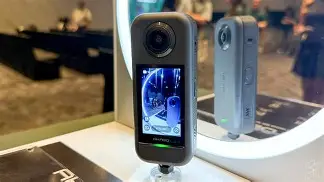
The Akaso 360 represents the democratization of spherical imaging. For years, 360-degree video was a niche reserved for high-end professional rigs or expensive early-adopter consumer units. Akaso has positioned itself as a disruptor, offering a tool that prioritizes "capture now, frame later" workflows. The core appeal here is the elimination of the cinematographer’s anxiety. When you are skiing down a mountain or navigating a crowded spice market in Marrakech, you don’t always have the luxury of looking through a viewfinder. The Akaso 360 captures a complete sphere of data, allowing you to go back into the app and choose where the camera was "looking" after the fact.
Its hardware is designed for abuse. It features a compact, vertical form factor that fits into the palm of a hand or mounts easily to a helmet. The dual-lens system utilizes ultra-wide-angle optics that overlap to create a seamless stitch. While the resolution might sound high on paper, it is important to remember that those pixels are spread across a 360-degree field of view. Consequently, the "reframed" 1080p or 4K crop you pull from the footage will never match the raw sharpness of a traditional sensor, but it offers a perspective that is physically impossible for a standard camera to achieve.
The Strengths of 360 Capture
The true power of the Akaso 360 lies in its stabilization and software magic. Because the camera records everything, it can use internal gyroscopes to lock the horizon with absolute precision. No matter how much the camera shakes, vibrates, or flips, the resulting video remains perfectly level. This makes it an indomitable choice for action sports. Furthermore, the ability to create "Tiny Planet" effects or dynamic pans in post-production adds a level of cinematic flair that usually requires a multi-person crew or a complex gimbal setup.
The Fujifilm X-E5: The Purist’s Modern Tool
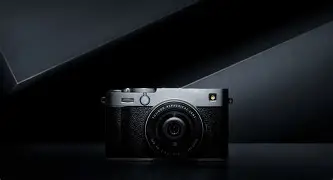
Switching gears to the Fujifilm X-E5 takes us into a different realm of craftsmanship. Fujifilm has long been the champion of the "photographic experience," and the X-E5 is the pinnacle of their compact mirrorless line. It is a rangefinder-style camera that focuses on intentionality. Unlike the Akaso, the X-E5 demands that you be present in the moment of capture. You look through the electronic viewfinder, you adjust the physical aperture ring on the lens, and you click the shutter with a specific composition in mind.
The X-E5 utilizes the acclaimed X-Trans CMOS sensor, which is renowned for its color science and high ISO performance. This is a camera for those who value the "Fujifilm Look"—the ability to use Film Simulations like Provia, Velvia, and Classic Negative to produce out-of-camera JPEGs that look like they were shot on professional 35mm film. The X-E5 isn't just a camera; it is a creative partner that encourages the user to study light and shadow. While it is certainly capable of high-end 4K video, its primary soul resides in still photography and high-bitrate cinematic storytelling.
Ergonomics and Aesthetic Appeal
One cannot discuss the X-E5 without mentioning its design. It is small enough to be a daily carry but powerful enough for professional work. The minimalist layout, often lacking a heavy d-pad or excessive buttons, relies on a clean touchscreen interface and a joystick. This makes for a sleek, "stealth" camera that is perfect for street photography. When you carry an X-E5, you blend into the environment in a way that a larger DSLR or a bright, blinking action cam cannot. It invites subjects to be more natural, making it a favorite for candid portraiture and documentary-style travel blogging.
Detailed Feature Analysis and Comparison
When we look at these two devices side-by-side, we are comparing two different types of "truth." The Akaso 360 offers the literal truth—every detail in every direction. The Fujifilm X-E5 offers the artistic truth—the curated view of the artist. Buyers typically care about three main pillars: image quality, ease of use, and durability.
Find top-rated Cameras & Photography products at great prices.
View Offers →In terms of image quality, the Fujifilm X-E5 is the clear winner for traditional metrics. The APS-C sensor provides significantly better dynamic range, allowing you to recover details in the shadows and highlights that would be lost on the smaller sensors of the Akaso. Additionally, the ability to swap lenses—from ultra-wide primes to telephoto zooms—gives the X-E5 a level of optical flexibility that a fixed-lens 360 camera simply cannot touch. However, the Akaso wins on "perspective quality." It can capture a 360-degree sunset and the reaction of the person watching it simultaneously, something the Fujifilm would require two cameras to do.
Ease of use is a double-edged sword. The Akaso is easier to shoot with (just press record), but harder to edit (you must reframe and stitch). The Fujifilm is harder to shoot with (you must focus and compose), but easier to edit (the files are ready to use immediately). For a quick social media update, the 360 workflow can be tedious, requiring a high-powered smartphone or tablet to process the spherical metadata.
Pros and Cons: Akaso 360
- Pro: Full 360-degree coverage ensures you never miss a moment or a detail regardless of where the camera is pointed.
- Pro: Incredible horizon-leveling stabilization that handles extreme vibrations and movement effortlessly.
- Pro: Compact and rugged build makes it suitable for underwater use and high-impact environments.
- Pro: Creative post-production options like "Tiny Planet," "Follow Pivot," and seamless digital zooming.
- Con: Lower effective resolution when reframed to standard 16:9 aspect ratios compared to dedicated mirrorless cameras.
- Con: Stitching lines can occasionally be visible if objects are too close to the lens seams.
- Con: Requires significant post-processing time and powerful mobile apps for reframing footage.
Pros and Cons: Fujifilm X-E5
- Pro: Exceptional image quality with the X-Trans sensor, offering professional-grade color and sharpness.
- Pro: Access to the vast library of X-mount lenses, ranging from high-end f/1.2 primes to versatile zooms.
- Pro: Legendary Film Simulations reduce the need for extensive color grading and RAW editing.
- Pro: Tactical, tactile shooting experience with physical dials and a high-resolution electronic viewfinder.
- Con: Not ruggedized; requires a gimbal for smooth action video and is sensitive to dust and moisture.
- Con: Limited to a single field of view at any given time; requires careful aiming and composition.
- Con: Larger footprint than an action camera, making it less ideal for mounting on vehicles or helmets.
The Hardware Comparison Table
| Feature | Akaso 360 | Fujifilm X-E5 |
|---|---|---|
| Sensor Type | Dual Small-format CMOS | APS-C X-Trans CMOS |
| Primary Use Case | Action, Vlogging, Immersive Media | Street, Travel, Portraiture, Cinema |
| Lenses | Fixed Dual Fisheye | Interchangeable X-Mount |
| Stabilization | Digital (6-Axis Gyro) | In-Body (IBIS) or Lens-Based |
| Durability | Waterproof/Shock-resistant | Standard (Requires Care) |
| Post-Processing | High (Reframing required) | Low to Medium (JPEGs are great) |
Buying Guide: Which Camera Should You Choose?
Choosing between the Akaso 360 and the Fujifilm X-E5 depends heavily on your lifestyle and the type of "story" you want to tell. To help you decide, consider the following real-world scenarios that typical buyers often encounter.
The Solo Traveler and Content Creator
If you are traveling alone and want to document your journey for a YouTube channel or social media, the Akaso 360 is an incredible "ghost cinematographer." You can mount it on an invisible selfie stick, and it will look like a drone is following you. It captures your face and the scenery at the same time. If your priority is showing the experience and the energy of a place without fumbling with settings, the Akaso is the real truth for you.
The Aspiring Artist and Photographer
If you find joy in the process of photography—waiting for the light to hit a building just right, or capturing the texture of a person's skin—the Akaso will frustrate you. Its images will feel clinical and "flat" by comparison. The Fujifilm X-E5 is for the person who wants to create art. It is for the person who wants to print their photos and hang them on a wall, or who wants their travel films to have a distinct, cinematic mood that reflects their personal style. The X-E5 is an investment in your growth as a visual storyteller.
The Family Documentarian
Families often struggle with being "behind the camera" and missing the moment. Here, the Akaso 360 has a unique advantage. You can set it in the middle of a birthday party or a holiday dinner and just let it run. Later, you can look around the virtual room and see everyone's reactions. However, if you want high-quality portraits of your children with beautiful "bokeh" (blurred backgrounds), the Fujifilm X-E5 with a 35mm or 50mm lens is vastly superior. The "truth" for families is balance: the Akaso captures the chaos, while the Fujifilm captures the beauty.
The Technical Realities: Resolution vs. Perception
A common misconception in the camera market is that more megapixels always equal a better picture. With the Akaso 360, the high resolution is a necessity because it has to cover so much ground. Once you "crop in" to a standard view, you are using a fraction of that sensor. This results in an image that is perfectly fine for mobile screens but can look "mushy" on a 4K monitor. The Fujifilm X-E5, on the other hand, uses every single pixel of its sensor for the frame you see. This results in a level of micro-contrast and "pop" that creates a 3D-like quality in images.
Furthermore, low-light performance is a major differentiator. The Akaso 360, with its smaller sensors, will struggle immensely in dark environments, producing "noise" and Grain. The Fujifilm X-E5 is a low-light beast by comparison. Whether you are shooting a dimly lit jazz club or a street scene at night, the X-E5 maintains color accuracy and clarity that the Akaso simply cannot match due to the laws of physics regarding sensor size and light gathering.
Looking for the best Cameras & Photography deals on Amazon?
Shop Amazon →Sound and Connectivity
Audio is often the forgotten half of a great video. The Akaso 360 features spatial audio microphones that attempt to track sound based on where you are looking in the 360 sphere. It is impressive for an all-in-one device but often picks up significant wind noise. The Fujifilm X-E5, while having decent internal mics, is designed to be used with external microphones. It is a "hub" for a larger production, whereas the Akaso is a self-contained unit. Both cameras feature robust Wi-Fi and Bluetooth connectivity for transferring files to smartphones, but the Fujifilm's app is generally more focused on remote control and file transfer, while the Akaso app is a full-blown video editor.
The Natural Evolution of Your Gear
Many professionals actually end up owning both. They use the Akaso 360 for the "impossible" shots—the mounting on the outside of a car or the 360-overhead view of a crowd. They use the Fujifilm X-E5 for everything else. But if you are starting with just one, you have to ask yourself: am I a "director" or a "spectator"? The Akaso lets you be a spectator of your own life, capturing everything so you can experience it later. The Fujifilm X-E5 forces you to be the director, choosing exactly what is worth remembering.
As we move into an era where "immersive" content is becoming standard, the Akaso 360 is future-proof in terms of format. However, the "classic" look of a large-sensor camera like the X-E5 never goes out of style. A well-composed, sharp photograph from an X-E5 will arguably hold its value and emotional weight longer than a 360-degree video that might feel like a technological gimmick in ten years.
Conclusion
The real truth behind the Akaso 360 vs. Fujifilm X-E5 debate is that they aren't actually rivals; they are different languages used to describe the same world. The Akaso 360 is the language of action, immersion, and total recall. It is the perfect tool for those who live life at a high velocity and want a camera that can keep up with their movement without demanding constant attention. It excels in stabilization, versatility, and the sheer fun of discovering new angles after the day is done.
The Fujifilm X-E5 is the language of nuance, texture, and light. It is for those who find the act of photography therapeutic and purposeful. Its superior sensor, interchangeable lens system, and legendary color science make it a powerhouse for anyone looking to produce professional-level imagery. While it lacks the "capture everything" safety net of the Akaso, it rewards the user with a level of quality and artistic control that defines the pinnacle of modern APS-C photography.
Ultimately, your choice should be dictated by your primary output. If your world lives on TikTok, Reels, and interactive VR platforms, the Akaso 360 is a revolutionary tool that will change how you create. If your world lives in galleries, high-end portfolios, and cinematic short films, the Fujifilm X-E5 is the companion you have been searching for. Both cameras are exceptional in their respective fields, and the "truth" is simply whichever one inspires you to get out and start shooting.