The Truth About the Wharfedale Diamond 12 1I: Pros, Cons, and Verdict
Introduction
The Wharfedale Diamond 12 1I sits in a crowded segment of the audio market: compact bookshelf speakers aimed at music lovers who want engaging sound without spending a fortune. In practice, buyers shopping this class care most about clarity, tonal balance, build quality, room compatibility, and how the speakers pair with modest amplifiers or receivers. This article examines the Diamond 12 1I through those lenses, provides a detailed analysis of real-world performance, lists clear pros and cons, and offers a buying guide that helps potential owners decide whether these speakers are a good fit for their listening habits and living space.
Product review and analysis
Design and build quality
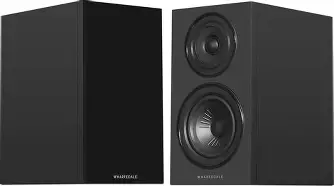
The Diamond 12 1I carries Wharfedale’s design language from the Diamond 12 series: a compact, no-frills cabinet with an emphasis on sensible construction rather than luxury materials. Cabinets are sufficiently braced for the size, with rounded edges and a restrained finish palette aimed at fitting into living rooms without calling attention to themselves. Fit and finish are generally solid for the price bracket, and the drivers are integrated into the baffle with neat alignment. The grille is functional and removable for critical listening.
Drivers, crossover, and engineering choices
Wharfedale’s Diamond line has historically used woven-fibre mid/bass drivers and soft-dome tweeters to balance warmth and transparency. The 12 1I follows that tradition with a mid/bass unit that prioritizes controlled response and a tweeter tuned for smoothness rather than extreme detail retrieval. The crossover is conservative: slopes and component choices aim to produce coherent midrange focus and to avoid obvious peaks or dips. These engineering choices result in a speaker that prefers musical balance over analytical precision.
Sound signature — what to expect
In normal listening conditions the Diamond 12 1I presents a pleasantly warm and approachable sound. The midrange is the speaker’s strength: vocals and acoustic instruments sit forward in the mix with authentic timbre. Treble is smooth and non-fatiguing, which benefits long listening sessions and genres such as jazz, folk, and classic rock. Bass is tight and controlled for a bookshelf size, but it doesn’t attempt to substitute for a subwoofer; deep sub-bass extension will be limited in small or untreated rooms.
Imaging, soundstage, and dynamics
For nearfield and small-room setups the Diamond 12 1I delivers good imaging with a coherent central image and believable instrument placement. The soundstage is pleasingly wide for the cabinet size when paired with proper placement (see buying guide below). Dynamics are competent: the speakers can convey microdynamics and rhythmic drive in most popular music, but under extremely loud playback or highly dynamic orchestral crescendos, they will sound constrained compared with larger floorstanders.
Performance in real-world use cases
Everyday listening — For users who listen to albums, podcasts, and streaming at moderate levels, the 12 1I offers engaging, fatigue-free performance. Vocals and acoustic instruments are rendered naturally, making it a compelling choice for living-room or desktop systems.
Home theatre front/rear duties — As left/right channels in a compact two-channel or HT setup, the Diamond 12 1I can provide clean dialogue and musical support. For a dedicated home theatre enthusiast demanding booming bass or very high SPLs, enlisting a subwoofer and choosing the 12 1I for nearfield duties or surrounds makes more sense than relying on them as full-range mains.
Desktop/nearfield monitoring — On a desktop with careful placement and good stands, the Diamond 12 1I can serve as an enjoyable listening pair for content creators who want a pleasant reference without clinical neutrality. They are not studio monitors by design, but they are forgiving and reveal major mix issues.
Discover deals on Audio & Headphones — updated daily.
Browse Now →Small- to medium-room listening — The speakers are best in rooms under about 20–25 square meters where they don’t have to supply massive bass. In larger rooms, they will still provide clear midrange but may lack authority below ~60–70 Hz without a subwoofer.
Amplifier pairing and system synergy
The Diamond 12 1I pairs well with modest, modern solid-state receivers and integrated amplifiers as well as with many class-D and class-AB designs. Because the speakers prioritize musicality over extreme sensitivity, amplifiers with moderate power (e.g., 30–100 watts per channel, depending on listening level and room) deliver satisfying results. Listeners seeking the highest dynamics or very high volume should consider amplifiers at the upper end of that range.
Practical considerations: placement and setup
Placement matters. These bookshelf speakers perform best when given 15–30 cm of clearance from the rear wall and when toe-in is used to focus the soundstage. On stands they benefit from being elevated to roughly ear height when seated. If placed on bookshelves, expect a bass boost that may mask detail; stands and room treatment produce the most balanced results.
Durability and long-term ownership
Wharfedale’s build choices for the Diamond 12 1I are conservative but durable. The cabinets and drivers should provide many years of service under normal domestic use. The straightforward crossover layout also makes the speakers more repairable than many contemporary low-cost designs that use integrated modules or hard-to-replace driver assemblies.
Pros & Cons
- Pros: Musical midrange that favours vocal presence and acoustic instruments
- Pros: Smooth, non-fatiguing treble suitable for long listening sessions
- Pros: Solid build quality and conservative, timeless styling
- Pros: Good imaging and a surprisingly wide soundstage for a bookshelf speaker
- Pros: Pairs well with modest amplifiers — forgiving of budget electronics
- Cons: Limited low-frequency extension compared with floorstanding speakers
- Cons: Not the most analytically detailed option in this price band
- Cons: Bass output will depend heavily on placement and room; a subwoofer may be needed for full-range listening
How the Diamond 12 1I compares to nearby alternatives
A comparison helps put the Diamond 12 1I into context. The table below contrasts the Diamond 12 1I with three typical bookshelf alternatives that prospective buyers often consider. The comparisons are qualitative and focus on how each speaker meets common buyer priorities: tonal balance, bass capability, listening context, and recommended amplifier type.
| Model | Tonal Character | Bass Strength | Best For | Recommended Amp Profile |
|---|---|---|---|---|
| Wharfedale Diamond 12 1I | Warm, vocal-forward | Tight, controlled — limited extension | Everyday listening, living rooms, desktop use | Modest solid-state or integrated, 30–100 Wpc |
| Competitor A (balanced-bright) | More analytical, brighter treble | Similar bass, slightly less warmth | Critical listening, detailed genres | Neutral amp with clean treble |
| Competitor B (bass-forward) | Warm, emphasised lower mids | Deeper extension for the class | Casual listeners wanting stronger punch | Lower-power amp acceptable |
| Competitor C (studio-lean) | Neutral, reference-style | Lean bass, requires subwoofer for fullness | Home studio and mixing on a budget | Transparent amp, low coloration |
Buying guide: what to consider before purchasing
1. Know the listening goals
If the priority is warm, engaging playback for vocal-centric music (singer-songwriter, jazz, classic rock), the Wharfedale Diamond 12 1I is well aligned with those goals. If the buyer seeks the most extended bass or forensic clarity for mixing, a different speaker or adding a subwoofer will better meet those needs.
2. Room size and placement
Rooms under 20–25 m² are an ideal environment for the 12 1I. In small rooms the speakers will deliver convincing midrange and a satisfying sense of immediacy. Larger living spaces often expose the limits of low-frequency output, so consider a subwoofer or larger mains if the room demands more authority.
Discover deals on Audio & Headphones — updated daily.
See Deals →3. Amplifier matching
Match the speaker with an amplifier that provides enough clean power for the intended listening levels. The Diamond 12 1I benefits from amplifiers that are neutral and have low distortion; overly bright electronics can make the combined system sound thin. For casual listening, modern integrated amps or higher-quality stereo receivers provide excellent value.
4. Stands vs. bookshelf surface
For best imaging and tonal balance, stands are recommended. Bookshelf placement often results in a bass hump due to boundary reinforcement. If space is constrained, try stands that isolate the cabinet and place the tweeter close to ear height when seated.
5. Consider a subwoofer
Buyers who listen to bass-heavy music, watch films, or want a full-range experience will benefit from pairing the 12 1I with a compact subwoofer. A crossover set appropriately (e.g., around 60–80 Hz) enables the Wharfedale to focus on midrange clarity while the sub handles the low-end foundation.
6. Critical listening tips before purchase
- Test with familiar recordings that have good production quality to evaluate tonal balance.
- Listen at typical playback levels to see how dynamics and distortion behave.
- Assess the speakers in the room where they will be used if possible—room acoustics can dramatically alter perception.
- Compare amplifier pairings if the retailer allows swaps—some amplifiers will reveal more of the speaker’s potential.
Real-world scenarios: who benefits most
Apartment dwellers who want musical satisfaction without disturbing neighbours will appreciate the Diamond 12 1I’s controlled bass and smooth treble. Desktop listeners who value a warm midrange for podcasts, streaming, and gaming will find these speakers pleasant and forgiving. Small-family living rooms used for background music and casual listening are another natural match. Conversely, audiophiles seeking high SPL, deep bass, or hyper-accurate neutrality should look at larger models or dedicated monitor speakers and subwoofer combinations.
Maintenance and setup tips
Keep speaker terminals clean and use good-quality banana plugs or spade connectors for reliable contact. Dust the cabinets and grilles occasionally and avoid exposing the drivers to direct sunlight over long periods. If the speakers will be used for long listening sessions, experiment with toe-in angle and placement distance from the rear wall to find an optimal balance between bass reinforcement and midrange clarity.
Conclusion
The Wharfedale Diamond 12 1I is a thoughtfully engineered bookshelf speaker that prioritizes musical engagement and ease of listening. Its strengths are a warm, present midrange, smooth treble, and robust build for the price bracket. It is well suited to everyday listening, desktop systems, and small-to-medium rooms, especially when paired with a modestly powered but neutral amplifier. The main compromises are limited deep bass and slightly less analytical resolution than higher-priced reference speakers. For buyers who want an enjoyable, non-fatiguing listening experience and value coherent musical presentation over technical extremes, the Diamond 12 1I represents a compelling and practical choice.