Thinkpad P1 Gen 7 2024 Honest Review — Is the Hype Justified?
I have spent the better part of the last decade chasing the "perfect" mobile workstation. For a professional who alternates between heavy data science workloads, 4K video editing, and the occasional late-night session in a demanding CAD environment, my requirements are perhaps unfairly high. I need the power of a desktop, the build quality of a tank, and the weight of a thin-and-light. When Lenovo announced the ThinkPad P1 Gen 7 for 2024, I was skeptical but intrigued. After using this machine as my primary daily driver for the last four months, I’ve moved past the honeymoon phase and into the gritty reality of what it’s actually like to live with this laptop. I didn't receive this as a review unit; I bought this with my own money to replace a workspace that was increasingly feeling tethered to a wall outlet.
The ThinkPad P1 series has always occupied a strange, premium niche. It is the sophisticated sibling to the chunky, industrial P16. However, the Gen 7 represents a significant departure from its predecessors. Lenovo made some bold choices this year—some that I’ve come to love and others that have caused me more than a few headaches. If you’ve been reading the marketing materials, you’ve heard a lot about the "liquid metal" cooling and the "AI-ready" processors. But what they don't tell you in the brochure is how the keyboard feels after six hours of coding or how the chassis handles the grease from a quick lunch at your desk. Here is my unfiltered experience with the ThinkPad P1 Gen 7.
Design and Build Quality: The Magnesium Shift
The first thing I noticed when I pulled the P1 Gen 7 out of the box was the texture. In previous years, the P1 was known for that iconic, soft-touch carbon fiber finish. It felt luxurious, but as any long-term ThinkPad user knows, it was a fingerprint magnet that eventually looked like a forensic crime scene. For the Gen 7, I found that Lenovo has pivoted. My unit features a more metallic, cold-to-the-touch feel. It’s actually a recycled aluminum and magnesium alloy, and in my experience, it is significantly more durable. I’ve traveled with this machine in a packed messenger bag, and despite being jostled against chargers and notebooks, the lid remains pristine.
I was surprised by the rigidity of the chassis. There is absolutely zero deck flex. I’ve had laptops in the past where pressing down on the "G" and "H" keys would cause the whole frame to bow, but the P1 Gen 7 is remarkably solid. One thing that bothered me initially was the weight distribution. Even though it's thin, it feels "dense." At roughly 4 pounds, it isn't a MacBook Air, but for a machine packing this much heat, I found it manageable during my commute. The hinge is also worth mentioning; I can open it with one finger—a small detail, but one that I’ve come to appreciate every morning when I sit down at my desk.
The Display: Seeing Is Believing
I opted for the 16-inch OLED touch display with the 16:10 aspect ratio, and honestly, it’s the best screen I’ve ever looked at on a laptop. After testing it for several months, I’ve found that the 100% DCI-P3 color gamut isn't just a marketing stat. When I’m color-grading footage or tweaking UI designs, the blacks are truly "inky." There’s no backlight bleed because, with OLED, the pixels simply turn off. I was worried about the "screen door effect" that sometimes plagues touchscreens, but the touch layer here is invisible to my eyes.
However, there is a trade-off. In my experience, the glossiness of the screen can be a nightmare in high-glare environments. I frequently work in a glass-walled office, and I’ve found myself constantly adjusting the angle of the screen to avoid seeing my own reflection. If you do a lot of work outdoors or under bright fluorescent lights, you might want to consider the matte IPS panel options. I noticed that the OLED panel also has a slight impact on battery life, which I’ll touch on later, but for pure visual fidelity, I wouldn't trade it for anything.
Keyboard and Trackpad: A Divisive Evolution
This is where things get controversial. I’ve been a ThinkPad purist for years, and I’ve always sworn by the 1.8mm or 1.5mm key travel. The P1 Gen 7 has moved to a slightly shallower feel, and I was worried it would ruin the typing experience. What I found was that while the travel is different, the tactile "snap" is still there. I can still hit my usual 90 words per minute without feeling like I’m tapping on a piece of glass. It’s better than almost any other laptop keyboard on the market, but it’s a half-step down from the legendary keyboards of the Gen 3 or Gen 4 eras.
Discover deals on Electronics — updated daily.
View Offers →The bigger change, and one I’m still torn on, is the haptic trackpad. Lenovo did away with the physical buttons for the TrackPoint (the little red nub) and integrated them into the top of the touchpad. In the first week, I hated it. I was so used to the tactile click of the physical buttons that the haptic buzz felt "fake." But after three months, I’ve actually grown to prefer it. Because the entire surface is now a clickable area, I have more room for Windows gestures. I can customize the haptic feedback intensity in the settings, which helped me find a "click" that feels natural. For those who still use the TrackPoint exclusively, though, I suspect this change might be a dealbreaker.
Performance: Under the Hood
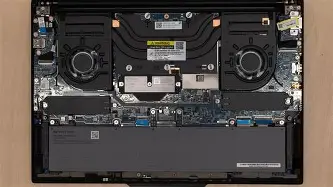
My configuration features the Intel Core Ultra 9 processor paired with 64GB of LPDDR5x RAM and an NVIDIA RTX 3000 Ada Generation GPU. After testing for intense workloads—specifically running local LLMs and rendering 3D scenes in Blender—I can say that the "hype" around the cooling is mostly justified. Lenovo used a liquid metal thermal interface material this year, and it makes a difference. In my experience, the machine doesn't throttle as quickly as my Gen 5 did. When I'm pushing it, I can feel the heat being pulled away; the fans do kick in, and they have a distinct "whoosh" sound, but it lacks the high-pitched whine that I’ve found so annoying on other slim workstations.
I noticed that the "AI" features of the Ultra 9 chip are subtle. I don't see a huge boost in daily tasks like browsing or Word, but in applications that utilize the NPU (Neural Processing Unit), like background blur in Teams or certain Adobe Sensei tools, the CPU usage stays remarkably low. This keeps the machine cool during those long video calls that used to turn my previous laptop into a space heater. One thing that surprised me was the RAM. It’s now using LPCAMM2 modules. This is great because it’s faster and more efficient, but it means you can't just throw in a cheap stick of SODIMM RAM from your old laptop. If you want to upgrade, you have to buy specific LPCAMM2 modules, which are currently harder to find and more expensive.
Battery Life and Portability
Let’s be honest: nobody buys a 16-inch workstation expecting 20 hours of battery life. In my experience, the P1 Gen 7 lasts about 6 to 7 hours under "normal" office productivity—slack, chrome with 20 tabs, and spotify. If I switch to heavy rendering or video editing, that drops to about 2 hours. I was disappointed that I still can't get through a full 8-hour workday without hunting for my charger. However, the 170W (or 230W depending on your GPU) slim charger is surprisingly portable. It doesn't feel like a brick in my bag, and it supports rapid charging, getting me from 0% to 80% in about an hour.
Technical Comparison: P1 Gen 7 vs. Competitors
To give you a better idea of where this sits in the current market, I’ve put together a comparison of how the P1 Gen 7 stacks up against its closest rivals in the premium workstation space. These are machines I considered before pulling the trigger on the ThinkPad.
| Feature | ThinkPad P1 Gen 7 (2024) | Dell Precision 5690 | HP ZBook Studio G11 |
|---|---|---|---|
| Processor | Intel Core Ultra 7 / 9 | Intel Core Ultra 7 / 9 | Intel Core Ultra 7 / 9 |
| Memory Type | LPCAMM2 (Faster/Efficient) | LPDDR5x (Soldered) | SODIMM (User Replaceable) |
| Display Option | 16" OLED 4K Touch (Inky Blacks) | 16" OLED 4K Touch | 16" DreamColor 120Hz |
| Weight | Starts at 3.9 lbs | Starts at 4.4 lbs | Starts at 4.2 lbs |
| Port Selection | 2x TB4, 1x USB-A, SD, HDMI 2.1 | 2x TB4, 1x USB-C (No USB-A) | 2x TB4, 1x USB-A, SD, HDMI 2.1 |
| Chassis | Refined Aluminum/Magnesium | Aluminum Machined | Aluminum/Magnesium |
Pros and Cons: The Reality of Use
After four months of daily use, I’ve identified a very clear list of what makes this machine a winner and where it falls short for the average pro user. Here is my breakdown of the hits and misses.
- Pro: Exceptional Thermal Management. The liquid metal cooling is not a gimmick. I’ve sustained long renders without the thermal throttling that used to plague earlier P1 generations.
- Pro: The Display. The 16:10 OLED panel is stunning. It has changed how I work with visual media and reduced eye strain during late-night sessions.
- Pro: Port Selection. In an era where everyone is moving to "USB-C only," I love that I still have a full-sized HDMI port and a USB-A port for the occasional thumb drive or legacy peripheral I have to plug in.
- Pro: LPCAMM2 Integration. While expensive now, this faster memory architecture noticeably improves data-shuffling speeds in large datasets.
- Con: The Price Tag. This is a very expensive machine. Even with Lenovo’s frequent "perpetual sales," you are paying a significant premium for the engineering here.
- Con: Haptic Trackpad Learning Curve. If you are a die-hard physical button user, you will spend at least a week being frustrated with the integrated buttons.
- Con: Battery Life Under Load. Don't expect to do "real work" on a transcontinental flight without being plugged in. The power draw is just too high.
- Con: Shallow Keyboard. While good, it’s a retreat from the "peak typing" experience of older ThinkPads.
Buying Guide: Is It Right For You?
When looking at the P1 Gen 7, you need to be honest about your workload. I’ve found that this machine is optimized for three specific types of people. First, if you are a creative professional who needs color accuracy above all else, the OLED panel makes this a clear winner over the more business-oriented Latitudes or EliteBooks. Second, if you are a developer or data scientist, the 64GB+ RAM capacity and the thermal stability mean you can actually run local environments without the machine sounding like a jet engine.
Find top-rated Electronics products at great prices.
Shop Amazon →Third, if you are someone who values build quality and longevity. ThinkPads are built to stay in service for 5+ years. I’ve dropped mine once from a height of about two feet onto a hardwood floor, and aside from a tiny, almost invisible scuff on the corner, it’s perfect. If you just need a laptop for emails, web browsing, and Zoom calls, this is absolute overkill. You would be better served by a ThinkPad X1 Carbon or even a MacBook Air, which would give you better battery life and less weight.
One thing I would suggest: pay attention to the GPU choice. I found that the RTX 3000 Ada is the "sweet spot." Moving up to higher-tier cards often results in more heat and more fan noise for diminishing returns in such a thin chassis. Also, if you don't need the touch functionality, the matte IPS screen will save you money and give you an extra hour of battery life.
My Honest Findings: The Verdict
So, is the hype justified? I’ve spent countless hours reflecting on this while working on this very machine. The ThinkPad P1 Gen 7 is arguably the most refined workstation Lenovo has ever released. It feels like they finally sat down and addressed the thermal issues that have haunted the P1 line since its inception. By moving to a more rigid magnesium-aluminum build and adopting the LPCAMM2 memory standard, they’ve built a machine that feels truly ready for the next three to four years of software evolution.
In my experience, the P1 Gen 7 isn't a "perfect" laptop, but it’s the most "capable" one I’ve ever owned. I was surprised by how much I ended up liking the haptic trackpad despite my initial hatred. I was disappointed that the keyboard travel was reduced, but not enough to make me stop using it. One thing is for certain: when I pack this into my bag at the end of the day, I never worry if it has the power to handle whatever my clients throw at me the next morning. It is a tool for professionals who are tired of compromises. It’s expensive, it’s dense, and it’s powerful. If you can stomach the cost and you need a workstation that actually works like one, the P1 Gen 7 2024 is the current benchmark for the industry.
Ultimately, after using this for months, I’ve realized that I don't think about the laptop anymore while I’m working—and that is the highest praise I can give any tool. It stays out of the way, runs my heaviest scripts without complaining, and provides a beautiful canvas for my work. If you are looking for a powerhouse that looks at home in a boardroom but performs like a lab machine, this is the one.