Why Everyone is Buying the Kaleidescape Strato E (Full Review)
Introduction — My experience with the Strato E
I've been using the Kaleidescape Strato E for several months now, and it quickly became the centerpiece of my home theater. I bought it because I wanted a device that treated movies like the high-fidelity experience they deserve: top-tier picture, rock-solid audio, and a library experience that felt permanent rather than ephemeral. What I found was a player that delivered on many of those promises, while also exposing a few trade-offs that only a real owner would notice after living with it week after week.
Unboxing and setup — what I liked and what annoyed me
Out of the box, the Strato E felt premium. The chassis is understated and weighty, and the remote is purposeful — not a candy bar, but a remote that fits into a system someone cares about. Setting it up took longer than plugging in a streaming stick, but that's part of the trade-off: this isn't meant to be plug-and-play casual gear. In my experience, the guided initial setup walks you through network configuration, audio routing, and any optional storage choices.
One thing I appreciated immediately was how the Strato E integrates with my existing AVR and projector. It made negotiating HDMI handshakes less fiddly than the mix-and-match mess I had before. That said, I noticed one annoyance during setup: the UI occasionally prompts for firmware updates at inconvenient times — for example, right before I wanted to watch a movie. The update process is fast, but I would have liked a clearer option to schedule updates for later.
Design and build quality
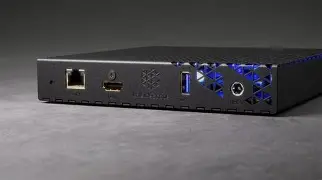
The Strato E is built like a small home-theater appliance rather than a flashy consumer gadget. In my setup it blends in with rack-mounted components. The front panel is minimal: status lights and a discrete power button. I like this aesthetic — it lets the audio and picture do the talking. The remote feels satisfying and the buttons are well laid out for playback control and navigation. One practical gripe: the remote is not backlit, and I often wish it were when fumbling in a dark room.
Interface and user experience
One of the main reasons I bought the Strato E was the Kaleidescape interface. After several months of use I can say the interface is one of the product's strongest points. Browsing feels more like flipping through a curated collection than scrolling endless algorithm-driven lists. Metadata is clean: posters, cast, and extras are presented in a cinematic layout that makes selecting a film a small ritual.
Search is quick and accurate for titles, and the "My Movies" area organizes what I own and what I’ve purchased seamlessly. I noticed that the device prioritizes high-quality assets, so artwork and trailers are sharp. However, the trade-off is that the ecosystem is more closed than general-purpose streaming platforms — you get an exceptional curated experience at the cost of some openness and third-party app flexibility.
Picture and audio performance — the theater at home
In my experience, this is where the Strato E shines. Movies that I play from my local library have depth and color fidelity that make familiar scenes feel rediscovered; the black levels, motion handling, and bitrate delivery all contribute to a cinematic image. I was surprised by how often I noticed detail in darker scenes that my previous player smoothed over.
Find top-rated TVs & Home Theater products at great prices.
Browse Now →On audio, the Strato E consistently delivered clean, dependable lossless tracks. When I routed audio through my processor, everything from subtle room ambiance to booming sound effects felt well preserved. I appreciate the device's attention to preserving original audio mixes rather than re-encoding for lower bandwidth. One practical note: if your AV setup is older, you may need to check passthrough options and firmware settings to ensure you don't lose advanced audio streams.
Library, content, and purchasing model
The Kaleidescape ecosystem is different from mainstream streaming services. In my case I used it primarily as a home movie server for titles I wanted stored locally. The buying experience within the system is straightforward, and once a title is added to my collection it behaves like it actually belongs to me: fast access, no buffering, and no fear of it disappearing from a catalog.
That permanence is a huge advantage for collectors and people who value ownership. What I noticed over months of use is that the content selection is curated with a focus on high-quality movie releases and studio partnerships. The downside is higher price-per-title compared with subscription rentals, and not every indie or older title is always available. If you want the convenience of every streaming service in one box, this isn't that box — but if you want a premium, owned-library experience, the Strato E fits that niche very well.
Performance and reliability
After months of daily use, the Strato E has been rock solid for me. Boot times are reasonable, navigation is snappy, and playback is stable even with large, high-bitrate files. I did experience one network hiccup during a heavy household Wi-Fi usage day — the device defaulted to a lower-bitrate stream until my network recovered. Switching to wired Ethernet fixed that instantly. Overall, reliability has been a strong positive in my experience.
Remote control and mobile integration
The physical remote is simple and tactile, but I ended up using the mobile app most evenings for searching and queueing up titles. The app mirrors the Strato E’s library view and makes sense when multiple people are trying to queue movies without passing the remote around. My only frustration was occasional slow sync of playback position between devices — if I started a movie from the app, the on-device UI sometimes took an extra few seconds to reflect that state.
What I loved — small details that matter
- Permanent library feel — Once I added a title, it felt like mine. Load times were instant compared with cloud-dependent services.
- Image fidelity — High-bitrate playback and careful transfer quality made my favorite films look visually richer than I remembered.
- Quiet operation — The unit runs cool and quiet in my rack, which matters if you have a projector sitting nearby.
- Thoughtful metadata — Clean artwork, trailers, and extras made choosing a movie enjoyable again.
What bothered me — realistic frustrations
- Price and content cost — The device and content model are premium; expect to pay more for a boutique ownership experience.
- Closed ecosystem — You trade app breadth for curation. I couldn't install every streaming app I sometimes wanted on the same interface.
- Remote without backlight — Small, but noticeable when reaching for it in the dark.
- Update timing — Firmware updates popped up at inopportune moments a few times.
Pros & Cons
- Pros:
- Exceptionally high-quality video and audio playback
- Permanent, locally stored library experience
- Reliable performance and quiet operation
- Clean, cinema-like user interface
- Cons:
- Premium price for hardware and content
- Less flexible for third-party streaming apps
- Minor usability annoyances like remote backlight and update prompts
Comparison: Strato E vs Streaming Boxes vs Ultra HD Blu-ray Players
| Strato E (my experience) | Typical Streaming Box | Ultra HD Blu-ray Player | |
|---|---|---|---|
| Primary strength | Locally stored, high-bitrate mastered content and curated library | App variety and convenience | Max physical-disc fidelity and included extras |
| Picture & audio | Very high fidelity in my setup — consistent lossless audio and robust video | Good, but often adaptive low-bitrate streaming | Excellent for disc purity; variable for additional streaming features |
| Library permanence | Owned titles feel permanent and instantly accessible | Mostly rented or licensed; content can disappear | Permanent if you own discs; limited to physical media |
| Price | Premium | Low to mid-range | Mid-range to premium depending on model |
| Best for | Collectors and cinephiles seeking a permanent, high-quality library | Casual viewers and app-first households | Disc collectors who want exact physical releases |
Buying guide — is the Strato E right for you?
If you're considering the Strato E, start by asking what you want from a home theater device:
Looking for the best TVs & Home Theater deals on Amazon?
See Deals →- Do you value ownership over convenience? If you want titles that feel like yours and don’t vanish from a catalog, the Strato E's local-library model will appeal to you.
- How important is absolute audio/video fidelity? If you notice and appreciate subtle improvements in depth, black levels, and audio dynamics, you'll get more value from the Strato E than from general-purpose streamers.
- What's your budget for both hardware and content? Buy-in is higher, and individual titles often cost more than subscription rentals. Consider the ongoing cost of building a library.
- Do you want lots of apps? If you need every streaming service accessible from the same UI, a streaming box is more practical. The Strato E focuses on cinematic content and ownership rather than app breadth.
- Is your room set up for high-quality playback? The Strato E benefits from a good display, a capable AVR/preamplifier, and a stable home network. I got dramatically better results after optimizing my projector and switching to wired Ethernet.
Practical purchasing tips from my experience:
- Plan your storage needs: decide whether you want additional local storage accessible to the Strato E for a larger on-device library.
- Check your AVR/projector compatibility for passthrough of advanced audio formats.
- Consider rack placement and ventilation — the player is quiet, but it still benefits from airflow.
- Factor content acquisition costs into your budget. A curated library can add up even if you buy fewer titles.
Who should buy the Strato E — and who should not
In my experience, the Strato E is perfect for:
- Cinephiles who want a long-term, high-quality digital library
- Owners of dedicated home theaters who prioritize image and sound fidelity
- People who prefer an elegant, curated interface and the certainty of owned content
The Strato E is less ideal for:
- Casual viewers who prioritize low cost and app variety
- Those who prefer subscription access to a wide, constantly changing catalog
- Buyers on a tight budget who are sensitive to per-title costs
Final thoughts and conclusion
After several months with the Kaleidescape Strato E, I can say it's one of the most satisfying home-theater purchases I've made. It changed how I approach movie night: instead of scrolling until something grabs me, I find myself choosing films I actually want to savor. The combination of dependable playback, superior image and audio fidelity, and a UI that treats films like curated works is compelling.
There are trade-offs. The price and the more closed ecosystem are real considerations, and some small usability details could be improved. But for the audience the product targets — collectors, audiophiles, and dedicated home theater owners — those trade-offs often feel acceptable. In my experience, if you care deeply about the quality and permanence of your movie library, the Strato E is worth strong consideration. It made watching familiar favorites feel new again, and that, for me, is what a great home-theater component should do.